
Spring is a’comin

This almost made me cry.

I wrote this song (if memory serves) while Romney was running against the other guy. Or maybe it was when some important decision that the Conservatives needed to stand up to (and probably didn’t) was going on – There were certainly lots of those in the past few years.
It’s been such a disappointment. I was hoping to age gracefully with intelligent people running things rather than the complete morons we have now. Alas, it appears as if we will not get to the glory days anytime soon.
You’ll notice in this song both a rallying cry and also a tinge of either sadness or resignation. At the time of creation, the ‘sadness and resignation’ part was actually supposed to be portrayed as entrance into the promised land once the correct decisions were made….but I guess things didn’t turn out that way.

It really creates a nice atmosphere, and I love being able to change the colors whenever the mood strikes.


This was from our first gig, when we were ‘Quick’ at Gordon College.
And this is just a random funny picture:


What an annoying problem.
This is the solution.
Had my Sprint gold 64gb S6 since the 12th and have noticed that when I turn off WiFi and get close
to a place I’ve connected before it will automatically connect to it if anybody can help me
figure how to get it to stop this?
This is the Sprint Connections Optimizer. To turn off,
you go to Settings>>Mobile Networks>>Connections Optimizer,
where you can uncheck “Connections Optimizer”
Also, be sure to deselect connecting to partners wifi automatically.
I noticed my S6 was still connecting automatically to Xfinity the
other day because this was still checked.
Hi I am saving this for future reference. If the Updates in the Native Instruments account do not install correctly try this:
This error is caused by corrupted registry entries/system folders (-> missing msi- files). Please carry out out the following steps in order to fix this issue:
1) Click on Windows Start, type the word “regedit” and press Enter. The Windows Registry Editor should open.
2) In the left-hand browser column choose the following directory
HKEY_CLASSES_ROOT\Installer\Products
3) Press [Ctrl + F] to open the textsearch and enter the name of the product causing the issue (e.g. Absynth) and hit “enter” to search
4) As the first search result a folder in the format
{49AC4825-549F-4C80-8CAE-EE6D550095B1} <-- Example should appear under HKEY_CLASSES_ROOT\Installer\Products\*Folder Product-GUID* 5) Delete this folder (for example: HKEY_CLASSES_ROOT\Installer\Products\{49AC4825-549F-4C80-8CAE-EE6D550095B1} ) 6) Close Windows Registry Editor and run the installer again.
Where science fiction becomes science fact.
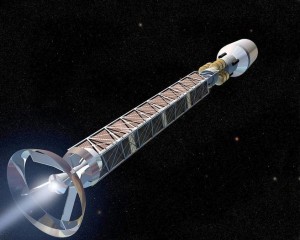
Source: Antimatter to ion drives: NASA’s plans for deep space propulsion | Cosmos
Old Ben Franklin, from what I have heard, decided that being a vegetarian was a good idea. But I have read that when he decided to leave Boston, there was an enlightening incident that occurred while he was in a boat off of Block Island. The crew was catching and cooking up fish, and for a while old Ben stuck to his guns and did not partake. But the smell of frying fish evidently finally got to him. Here is how he recalls it.
“I balanced some time between principle and inclination until I recollected that when the fish were opened, I saw smaller fish taken out of their stomachs. Then, thought I, if you eat one another I don’t see why we may not eat you. So I dined upon cod very heartily and have since continued to eat as other people…”
That Ben, what a card he was!


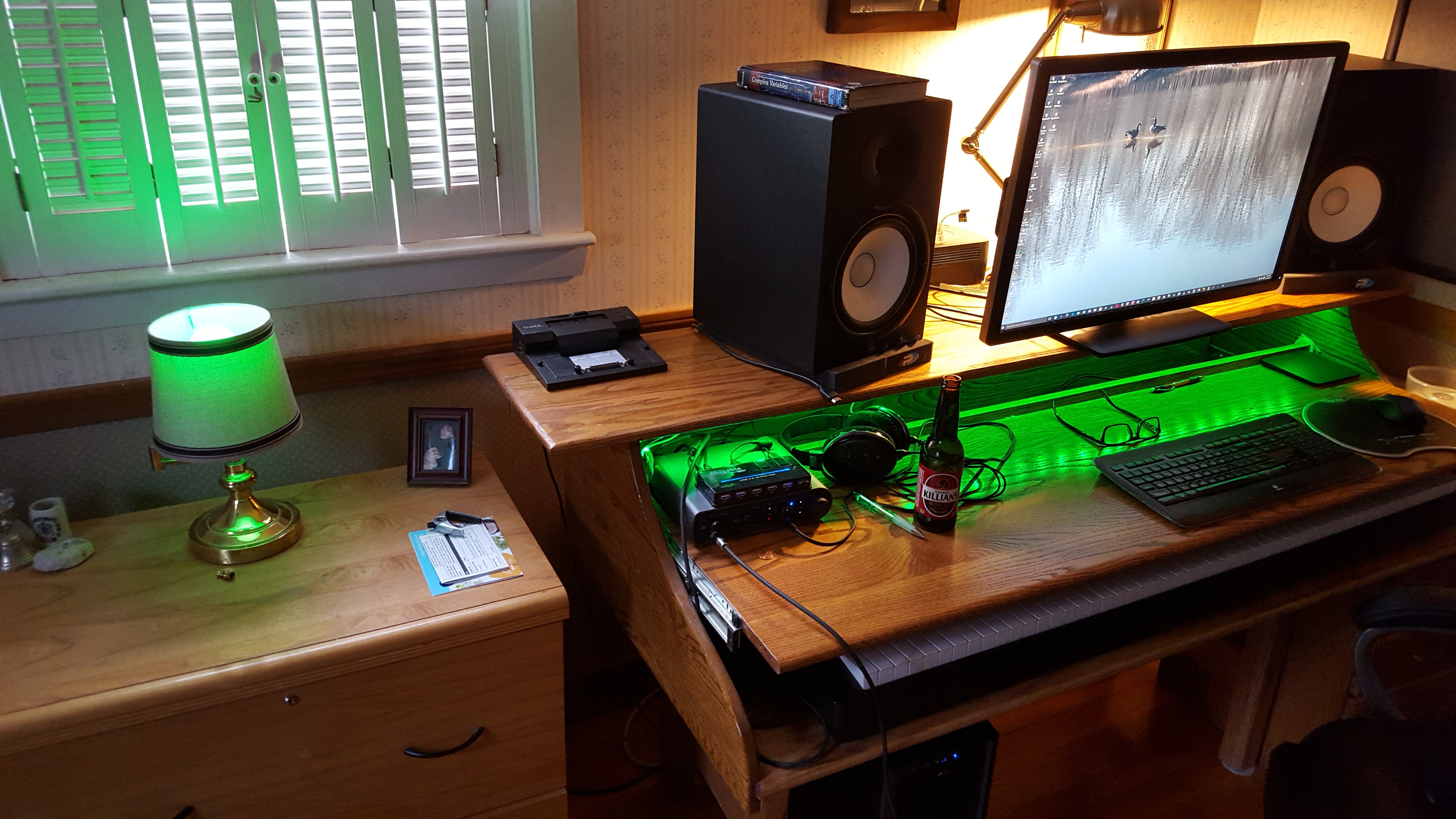
It’s St. Patty’s day in the studio! Lightify Green Lights? ON.
As Silence Dogood, Benjamin Franklin wrote about many of his peers who got sent off to Harvard, whereas his father did not put up the money for him to go. When I read this passage below, I couldn’t help thinking about Barack Obama and people like him who got to waltz through life in a time of affirmative action. The last sentence is so perfectly reflective of people like him.
——–
Silence was particularly fond of ridiculing Harvard. She complained that it had been ruined by corruption and elitism, and that most of its students learned nothing there except how to be conceited:
“I reflected in my Mind on the extream Folly of those Parents, who, blind to their Childrens Dulness, and insensible of the Solidity of their Skulls, because they think their Purses can afford it, will needs send them to the Temple of Learning, where, for want of a suitable Genius, they learn little more than how to carry themselves handsomely, and enter a Room genteely, (which might as well be acquir’d at a Dancing-School,) and from whence they return, after Abundance of Trouble and Charge, as great Blockheads as ever, only more proud and self-conceited.”
During his early career, Caesar had seen how chaotic and dysfunctional the Roman Republic had become. The republican machinery had broken down under the weight of imperialism, the central government had become powerless, the provinces had been transformed into independent principalities under the absolute control of their governors, and the army had replaced the constitution as the means of accomplishing political goals. With a weak central government, political corruption had spiraled out of control, and the status quo had been maintained by a corrupt aristocracy, which saw no need to change a system that had made its members rich.
Sound familiar?

Edison began his career as an inventor in Newark, New Jersey, with the automatic repeater and his other improved telegraphic devices, but the invention that first gained him notice was the phonograph in 1877. This accomplishment was so unexpected by the public at large as to appear almost magical. Edison became known as “The Wizard of Menlo Park,” New Jersey.
His first phonograph recorded on tinfoil around a grooved cylinder. Despite its limited sound quality and that the recordings could be played only a few times, the phonograph made Edison a celebrity. Joseph Henry, president of the National Academy of Sciences and one of the most renowned electrical scientists in the US, described Edison as “the most ingenious inventor in this country… or in any other”. In April 1878, Edison traveled to Washington to demonstrate the phonograph before the National Academy of Sciences, Congressmen, Senators and US President Hayes.[34] The Washington Post described Edison as a “genius” and his presentation as “a scene… that will live in history”. Although Edison obtained a patent for the phonograph in 1878,[36] he did little to develop it until Alexander Graham Bell, Chichester Bell, and Charles Tainter produced a phonograph-like device in the 1880s that used wax-coated cardboard cylinders.


Pour molten salt into water and watch.
Wow cool version.

A primer to help you unentangle
the world of the very small.
Source: Quantum physics for the terminally confused | Cosmos
Click on the picture to open it.


This is a clip from the Beatles first American tour.
Hi – Check out the new podcast section. I just posted a podcast of Joe Viglione’s recent radio show.
Swimsuit Issue Time!

There is some controversy surrounding the time of Lady Gaga’s national anthem.
Source: Lady Gaga crushes national anthem, but there’s controversy about length – CBSSports.com

Get it on Noise Trade
If you want a great fast plotting and graphing application for free, this is the one. There’s a manual available from this page as well. But the basics are pretty simple. plot sin(x) gets you this:
Source: gnuplot homepage

I’ve updated my RC Response document (See the Math Documents link from the main menu). I added a section that explains why time shifting involve subtracting rather than adding slices of time.
Here’s another page that goes into even more detail.
App that searches unprotected cameras.

 Loading...
A classic drunk fan put down at the beginning. This was very early – David Rosenberg still on drums. It was from a gig at Jacks in Cambridge – long gone.


 Reload document
 Open in new tab
