This is a song written by England’s own Dave Overland, performed by the band Without Focus. Appearing in this song along with Dave are @rabbitwithmachinegun on keys and myself on lead guitars, bass and drums. Recorded and produced at Baselines Designs Studio in Boston.
Zevon had early music industry successes as a session musician, jingle composer, songwriter, touring musician, musical coordinator, and bandleader. Despite all of that, Zevon struggled to break through in his solo career until his music was performed by Linda Ronstadt, beginning with her 1976 album Hasten Down the Wind. It launched a cult following that lasted 25 years, with Zevon making occasional returns to album and single charts until his death from mesothelioma in 2003. He briefly found a new audience by teaming up with members of R.E.M. in the blues rock outfit Hindu Love Gods for a 1990 album release, although no tour followed. In 2023, Zevon was nominated for the Rock and Roll Hall of Fame.[2]
Zevon was born in Chicago, the son of Beverly Cope (née Simmons) and William Zevon. His father was a Jewish immigrant from Ukraine, whose original surname was Zivotofsky.[3] William Zevon worked as a bookie who handled volume bets and dice games for the notorious Los Angeles mobster Mickey Cohen.[4] He worked for years in the Cohen crime family, in which he was known as Stumpy Zevon, and was best man at Cohen’s first wedding.[5] Warren’s mother was from a Church of Jesus Christ of Latter-Day Saints family and of English descent.[6][7][8] They moved to Fresno, California. By the age of 13, Zevon was an occasional visitor to the home of Igor Stravinsky, where he briefly studied modern classical music alongside Robert Craft. Zevon’s parents divorced when he was 16 years old. He soon quit high school and moved from Los Angeles to New York City to become a folk singer.[9]
Zevon turned to a musical career early, forming a musical duo with his high school friend, Violet Santangelo, called lyme and cybelle. Bones Howe produced their first single, the minor hit “Follow Me”, which was written by Zevon and Santangelo and reached number 65 on the Billboardpop charts in April 1966. A follow-up single, a cover of Bob Dylan‘s “If You Gotta Go, Go Now” flopped, and Zevon left the duo. A third single without Zevon and another session that included him but was not previously released were included on the 2003 compilation The First Sessions.
Zevon spent time as a session musician and jingle composer. He wrote several songs for his White Whale labelmates The Turtles (“Like the Seasons” and “Outside Chance”), though his participation in their recording—if any—is unknown.[10] Another early Zevon composition (“She Quit Me”) was included in the soundtrack for the film Midnight Cowboy (1969); to suit its place in the film, the song was re-recorded by Leslie Miller as “He Quit Me”.
Zevon’s first attempt at a solo album, Wanted Dead or Alive (1970), was spearheaded by 1960s cult figure Kim Fowley but received almost no attention and did not sell well. Though Zevon continued to play occasional live dates as a solo artist, the next several years of his career were dominated by session work with other musicians.
During the early 1970s, Zevon toured regularly with the Everly Brothers as keyboard player, band leader, and musical coordinator.[9] Later the same decade, he toured with Don Everly and Phil Everly separately as they tried to launch solo careers after their breakup. He worked particularly closely with Phil, arranging and playing keyboards on his first and third solo albums (Star Spangled Springer (1973) and Mystic Line (1975)) and co-writing tracks on his second and third albums (Phil’s Diner (1974) and the aforementioned Mystic Line). Zevon’s song “Carmelita” was also recorded by Canadian singer Murray McLauchlan on his self-titled album of 1972.
These small successes were not particularly rewarding financially, and Zevon’s dissatisfaction with his career (and a lack of funds) led him to briefly move to Spain in the summer of 1975. He lived and played in the Dubliner Bar, a small tavern in Sitges, near Barcelona, owned by David Lindell, who was a mercenary. Together they composed “Roland the Headless Thompson Gunner“.
By September 1975 Zevon had returned to Los Angeles, where he roomed with Stevie Nicks and Lindsey Buckingham, who had at this time become members of Fleetwood Mac.[11] There he collaborated with Jackson Browne, who produced and promoted Zevon’s self-titled major-label debut in 1976.[12] Contributors to the album included Nicks, Buckingham, Mick Fleetwood, John McVie, members of the Eagles, Carl Wilson, Linda Ronstadt, and Bonnie Raitt. Ronstadt elected to record many of his songs, including “Hasten Down the Wind”, “Carmelita“, “Poor Poor Pitiful Me“, and “Mohammed’s Radio“. Zevon’s first tour in 1977, included guest appearances in the middle of Jackson Browne concerts, one of which is documented on a widely circulated bootleg recording of a Dutch radio program under the title The Offender Meets the Pretender.
Produced by Browne, Warren Zevon (1976) was his first album to chart in the United States, peaking at No. 189.[12] The first edition of the Rolling Stone Record Guide (published in 1979) called it “a masterpiece”. The guide’s latest edition (November 2004) calls it Zevon’s “most realized work”. Representative tracks include the junkie’s lament “Carmelita”; the Copland-esque outlaw ballad “Frank and Jesse James”; “The French Inhaler”, a scathing look at life and lust in the L.A. music business (which was actually about Marilyn Livingston, his long-time girlfriend and mother of his son, Jordan);[12] and “Desperados Under the Eaves“, a chronicle of Zevon’s increasing alcoholism.
Success
In 1978, Zevon released Excitable Boy (produced by Jackson Browne and guitarist Waddy Wachtel) to critical acclaim and popular success. The title tune is about a juvenile sociopath‘s murderous prom night and referred to “Little Susie”, the heroine of the song “Wake Up Little Susie” made famous by his former employers the Everly Brothers. Other songs such as “Roland the Headless Thompson Gunner” and “Lawyers, Guns and Money” used deadpan humor to wed geopolitical subtexts to hard-boiled narratives. Tracks from this album received heavy FM airplay, and the single release “Werewolves of London“, which featured Mick Fleetwood and John McVie, was a relatively lighthearted work featuring Zevon’s signature macabre outlook that reached No. 21 on the charts.
Country rock musician Linda Ronstadt helped popularize Zevon’s songs in the 1970s.
Zevon followed Excitable Boy with Bad Luck Streak in Dancing School, in 1980. This album was dedicated to Ken Millar, better known under his nom-de-plume as the detective novelist Ross Macdonald. One of Zevon’s literary heroes, Millar met the singer for the first time while participating in an intervention organized by Nelson, which helped Zevon temporarily curtail his addictions. Featuring a modest hit with the single “A Certain Girl” (Zevon’s cover of an R&B record by Ernie K-Doe) which reached No. 57 on the Billboard Hot 100 singles chart, the album sold briskly but was uneven, and represented a decline rather than commercial and critical consistency. It contained a collaboration with Bruce Springsteen on the song “Jeannie Needs a Shooter” and the ballad “Empty-Handed Heart” featuring a descant sung by Linda Ronstadt, which is about Zevon’s divorce from his wife, Crystal, the mother of his daughter Ariel; she has been erroneously described in some sources as his “second wife”.[3][14] (Marilyn “Tule” Livingston, the mother of his son, Jordan, and Zevon were in a long-term relationship but never married.) Later in 1980, he released the live album Stand in the Fire (dedicated to Martin Scorsese), recorded over five nights at the Roxy Theatre in Los Angeles.
Personal crisis and first comeback
Zevon’s 1982 release The Envoy returned to the high standard of Excitable Boy but was not a commercial success.[15] It was an eclectic but characteristic set that included such compositions as “Ain’t That Pretty at All”, “Charlie’s Medicine” and “Jesus Mentioned”, the first of Zevon’s two musical reactions to the death of Elvis Presley; the other is the song “Porcelain Monkey” on Life’ll Kill Ya in 2000. The album also contains the first of Zevon’s writing collaborations with respected writers of fiction: “The Overdraft”, co-written with Thomas McGuane. The title track was dedicated to Philip Habib, U.S. special envoy to the Middle East during the early 1980s. In the liner notes for the 1996 anthology I’ll Sleep When I’m Dead, Zevon stated that after the song came out, Habib sent him “a very nice letter of appreciation on State Department stationery”.[16] The lyrics of another track, “The Hula Hula Boys”, were excerpted in Hunter S. Thompson‘s 1983 book The Curse of Lono.
In 1983 Zevon, who was recently divorced, became engaged to Philadelphia disc jockey Anita Gevinson and moved to the East Coast.[17] After The Envoy was poorly received by critics, Asylum Records ended their business relationship with Zevon, which Zevon discovered only when he read about it in the “Random Notes” column of Rolling Stone. Following these career setbacks, he relapsed into drug and alcohol abuse. In 1984, he voluntarily checked himself into a rehab clinic in Minnesota. His relationship with Gevinson ended shortly thereafter.[17] Zevon retreated from the music business for several years, except for playing live solo shows; during this time he finally overcame severe alcohol and drug addictions.
During this time, Zevon collaborated with Bill Berry, Peter Buck and Mike Mills (of R.E.M.), and backup vocalist Bryan Cook to form a minor project called Hindu Love Gods. The group released the non-charting single “Narrator” for IRS Records in 1984, then went into abeyance for several years.
Berry, Buck and Mills served as the core of Zevon’s next studio band when he re-emerged in 1987 by signing with Virgin Records and recording the album Sentimental Hygiene. The release, hailed as his best since Excitable Boy, featured a thicker rock sound and taut, often humorous songs like “Detox Mansion”, “Bad Karma” (which featured R.E.M. lead singer Michael Stipe on backup vocals), and “Reconsider Me”. Included were contributions from Neil Young, Bob Dylan, Flea, Brian Setzer, and George Clinton, as well as Berry, Buck, and Mills. Also on hand were Zevon’s longtime collaborators Jorge Calderón and Waddy Wachtel.
During the Sentimental Hygiene sessions, Zevon also participated in an all-night jam session with Berry, Buck and Mills, as they worked their way through rock and blues numbers by the likes of Bo Diddley, Muddy Waters, Robert Johnson and Prince. Though the sessions were not initially intended for release, they eventually saw the light of day as a Hindu Love Gods album.
Transverse City was a commercial disappointment, and Zevon was dropped by Virgin Records soon after the album’s release. He almost immediately contracted, however, with Irving Azoff‘s new label Giant Records. The first release under Zevon’s contract with his new distributor was the album Hindu Love Gods, recorded during the Sentimental Hygiene sessions. The album included a cover of Prince‘s “Raspberry Beret“, which became a number 23 Modern Rock hit in the United States.
In 1991, Zevon who once again was a solo artist, released Mr. Bad Example. The album featured the modest pop hit “Searching for a Heart” and the rocker “Things to Do in Denver When You’re Dead”, later used as the title of the neo-noirfilm of the same name, directed by Gary Fleder; after some skirmishing over the unauthorized use of Zevon’s song title, the Zevon track was licensed to play over the film’s end credits. Zevon also sang lead vocals on the song “Casey Jones” from the Grateful Dead tribute album Deadicated, with regular collaborator David Lindley.
Zevon toured the United States (with the Odds), Europe, Australia and New Zealand during this period. Owing to his reduced circumstances, his performances were often true solo efforts with minimal accompaniment on piano and guitar;[18][19][20] the live album Learning to Flinch (1993) documents such a tour. Zevon often played in Colorado to allow for an opportunity to visit with his longtime friend Hunter S. Thompson.[21]
A lifelong fan of hardboiled fiction, Zevon was friendly with several well-known writers, who also collaborated on his songwriting during this period, including Thompson, Carl Hiaasen and Mitch Albom. Zevon also served as musical coordinator and occasional guitarist for an ad-hoc rock music group called the Rock Bottom Remainders, a collection of writers performing rock-and-roll standards at book fairs and other events. The group included Stephen King, Dave Barry, Matt Groening and Amy Tan, among other popular writers; it has continued to perform one benefit concert per year since Zevon’s death.
An affiliated project for which Zevon both played and wrote liner notes is the offbeat 1998 album Stranger Than Fiction, a two-CD set attributed to the Wrockers, containing rock covers and originals by many of the Remainders authors plus such notables as Norman Mailer and Maya Angelou. Zevon oversaw music for the short-lived revival of the NBC series Route 66 (1993), contributing that show’s main title theme, “If You Won’t Leave Me I’ll Find Somebody Who Will”. His music was also featured in the four William ShatnerTekWar movies in 1994. Zevon is listed as “theme music composer” in the opening credits. His song “Real or Not” was used as the show’s end credit theme song. The song appeared on Zevon’s 2-CD set, I’ll Sleep When I’m Dead (An Anthology). In the accompanying booklet, Zevon wrote, “I wrote this song for the William Shatner TV movies based on his novels. He is Captain Kirk, rest assured. He’d call me at home and demand to hear the song in progress, then he’d say “We need more guitars! More driving guitars!” It was cool. The track reflected my secret fondness for sleazy English techno records.”
In 1995, Zevon released the self-produced Mutineer. The title track was frequently covered by Bob Dylan on his U.S. fall tour in 2002.[22] Zevon’s cover of cult artist Judee Sill‘s “Jesus Was a Crossmaker” predated the wider rediscovery of her work a decade later. The album, however, had the worst sales of Zevon’s career, in part because of lack of promotion from his label, Giant. Rhino Records released a Zevon “best-of” compilation in 1996, I’ll Sleep When I’m Dead. Zevon also appeared on the Larry Sanders Show on HBO, in 1993, playing himself as a guest on the show, promoting Learning to Flinch. Zevon also played himself on two episodes of Suddenly Susan in 1999, along with singer and actor Rick Springfield.
Comedian and TV host David Letterman was credited by Zevon as “being the best friend my music ever had”.[23]
After another five-year layoff, Zevon signed with industry veteran Danny Goldberg’s Artemis Records and again rebounded with the mortality-themed 2000 release Life’ll Kill Ya, containing the hymn-like “Don’t Let Us Get Sick” and an austere version of Steve Winwood‘s 1980s hit “Back in the High Life Again”. With record sales brisk and music critics giving Zevon his best notices since Excitable Boy, Life’ll Kill Ya is seen as his second comeback. He followed with the album My Ride’s Here (2002), with its morbid prescience of things to come; the album included “Hit Somebody! (The Hockey Song)” (co-written by Mitch Albom, the author of Tuesdays with Morrie, and featuring Paul Shaffer, the Late Night band, and a spoken vocal from TV host David Letterman) and the ballad “Genius”—written with Pulitzer Prize and T.S. Eliot Prize-winning poet, Paul Muldoon—later used as the title of an anthology of Zevon’s recordings in 2002.
At about this time, he and the actor Billy Bob Thornton formed a close friendship, catalyzed by their common experiences with obsessive-compulsive disorder and the fact they lived in the same apartment building.[3] One of Zevon’s compulsions was buying and hoarding identical gray Calvin Klein T-shirts.[24]
In interviews, Zevon described a lifelong phobia of doctors and said he seldom consulted one. He had started working out, and he looked physically fit. Shortly before playing at the Edmonton Folk Music Festival in 2002, he started feeling dizzy and developed a chronic cough. After a period of suffering with pain and shortness of breath, Zevon was encouraged by his dentist to see a physician; he was diagnosed with pleural mesothelioma, a cancer (usually caused by exposure to asbestos) that affects the pleura, a thin membrane around the lungs and chest lining. Zevon was deeply shaken by the news and began drinking again after 17 years of sobriety.[25]
Although Zevon never revealed where he may have been exposed to asbestos, his son, Jordan, suggests that it came from Zevon’s childhood, playing in the attic of his father’s carpet store in Arizona. Refusing treatments he believed might incapacitate him, Zevon instead began recording his final album, The Wind, which includes performances by close friends including Bruce Springsteen, Don Henley, Jackson Browne, Timothy B. Schmit, Joe Walsh, David Lindley, Billy Bob Thornton, Emmylou Harris, Tom Petty, and Dwight Yoakam. At the request of the music television channel VH1, documentarian Nick Read was given access to the sessions and made the television film Inside Out: Warren Zevon.[26]
Friend Jackson Browne reunited with Zevon for his final album
On October 30, 2002, Zevon was featured alone on an episode of the Late Show with David Letterman as the only guest for the entire hour. The band played “I’ll Sleep When I’m Dead” as his introduction. Zevon performed several songs and spoke at length about his illness. Zevon had been a frequent guest and occasional substitute bandleader on Letterman’s television shows since Late Night was first broadcast in 1982. He noted, “I might have made a tactical error in not going to a physician for 20 years.” It was during this broadcast that, when asked by Letterman if he knew something more about life and death now, he first offered his oft-quoted insight that people need to “enjoy every sandwich.”[23] He also thanked Letterman for his years of support, calling him “the best friend my music’s ever had”. For his final song of the evening, and his final public performance, Zevon performed “Roland the Headless Thompson Gunner” at Letterman’s request. In the green room after the show, Zevon presented Letterman with the guitar that he always used on the show, with a single request: “Here, I want you to have this, take good care of it.”[27] The day after Zevon’s death, Letterman paid tribute to him by replaying his performance of “Mutineer” from his last appearance. The Late Show band played Zevon’s songs throughout the night.[citation needed]
Zevon stated previously that his illness was expected to be terminal within months after diagnosis in late 2002. However, he lived to see the birth of twin grandsons in June 2003 and the release of The Wind on August 26, 2003. Owing in part to the first VH1 broadcasts of Nick Read’s documentary Warren Zevon: Keep Me in Your Heart, the album reached number 12 on the U.S. charts, Zevon’s highest placement since Excitable Boy. When his diagnosis became public, Zevon told the media that he just hoped to live long enough to see the next James Bond movie (Die Another Day), a goal he accomplished.
Death
Zevon died of mesothelioma on September 7, 2003, aged 56, at his home in Los Angeles.[28] His body was cremated, and his ashes were scattered into the Pacific Ocean near Los Angeles.
Posthumous releases and awards
A tribute album titled Enjoy Every Sandwich: The Songs of Warren Zevon was released October 19, 2004. Zevon’s son, Jordan Zevon, was the executive producer of the album and performed “Studebaker”, a previously unfinished composition by his father. A second tribute album, Hurry Home Early: The Songs of Warren Zevon (“hurry home early” is from the song “Boom Boom Mancini”, on the album Sentimental Hygiene) was released by Wampus Multimedia on July 8, 2005.
On February 14, 2006, VH1 Classic premiered a music video from a new compilation, Reconsider Me: The Love Songs. The video, titled “She’s Too Good for Me,” aired every hour on the hour throughout the day.
First and last issues of the Zevon albums Stand in the Fire and The Envoy were released on March 27, 2007, by Rhino Records, alongside a Rhino re-issue of Excitable Boy, with the three CDs having four unreleased bonus tracks each. Noteworthy rarities include the outtakes “Word of Mouth” and “The Risk” from the Envoy sessions and “Frozen Notes (Strings Version)”, a melancholy outtake from Excitable Boy performed on acoustic piano with a string quartet.
Ammal Records was a new label started up as a partnership with New West Records by Zevon’s former boss at Artemis, Danny Goldberg. On May 1, 2007, Ammal released Preludes: Rare and Unreleased Recordings, a two-disc anthology of Zevon demos and alternate versions culled from 126 pre-1976 recordings that were kept in a suitcase. The album contains five previously unreleased songs: “Empty Hearted Town”, “Going All the Way”, “Steady Rain”, “Stop Rainin’ Lord” and “The Rosarita Beach Cafe”, along with Zevon’s original demo of “Studebaker”. Selections from an interview of Zevon by the Austin-based radio personality Jody Denberg are blended with about 40 minutes of music on the collection’s second disc.
The Wind was certified gold by the RIAA in December 2003, and Zevon received five posthumous Grammy nominations, including Song of the Year for the ballad “Keep Me in Your Heart”.[29]The Wind won two Grammys, with the album itself receiving the award for Best Contemporary Folk Album, while “Disorder in the House”, Zevon’s duet with Bruce Springsteen, was awarded Best Rock Performance by a Duo or Group with Vocal. These posthumous awards were the first Grammys of Zevon’s thirty-plus year career.
Personal life
Zevon was married to Crystal, and their daughter Ariel Zevon was born in 1976. Ariel Zevon is a singer-songwriter and former café owner in Vermont.[30] Warren Zevon and Marilyn Livingston Dillow had a son, Jordan Zevon in 1969. Jordan Zevon is a singer, musician, and songwriter.
I’ll Sleep When I’m Dead: The Dirty Life and Times of Warren Zevon, a biography by his ex-wife, Crystal Zevon, was published in 2007 by Ecco Books. The book is largely an oral history that consists of interviews with Zevon’s friends, relatives and associates, as well as excerpts from his diaries. Crystal Zevon said Warren had given her permission to use the journal excerpts and instructed her to present an unvarnished portrayal of his life that did not sanitize his many struggles.
George Plasketes, a professor at Auburn University, wrote a critical study of Zevon’s music in 2016, Warren Zevon, Desperado of Los Angeles. Zevon was also the subject of Michael Flood’s essay “Lord Byron’s Luggage: Warren Zevon and the Redefinition of Literature Rock”. A collection of short stories by Kelly Lynn Thomas, Miss Gun to a Knife Fight: Stories, is composed of retellings of songs by Zevon.
In 2012, George Gruel, a photographer who worked as Zevon’s aide-de-camp from 1978 to 1983, published a book of photos of Zevon. It is entitled Lawyers, Guns and Photos.[32]
Catholic and Orthodox tradition accredits him as the first bishop of Rome?—?or pope?—?and also as the first bishop of Antioch. Based on contemporary historical data, his papacy is estimated to have spanned from AD 30 to his death, which would make him the longest-reigning pope, at anywhere from 34 to 38 years; however, this has never been verified.[1]
Saint Irenaeus (c.?130 – c.?202 AD) explains the Apostle Peter, his See, and his successors in book III of Adversus Haereses (Against Heresies).[10] In the book, Irenaeus wrote that Peter and Paul founded and organized the Church in Rome.[11]
Sources suggest that at first, the terms episcopos and presbyteros were used interchangeably,[12] with the consensus among scholars being that by the turn of the 1st and 2nd centuries, local congregations were led by bishops and presbyters, whose duties of office overlapped or were indistinguishable from one another.[13]Protestant and secular historians generally agree that there was probably “no single ‘monarchical’ bishop in Rome before the middle of the 2nd century…and likely later.”[14] Outside of the New Testament, several apocryphal books were later attributed to him, in particular the Acts of Peter, Gospel of Peter, Preaching of Peter, Apocalypse of Peter, and Judgment of Peter, although scholars believe these works to be pseudepigrapha.[15][16][17]
The New Testament presents Peter’s original name as Simon (/?sa?m?n/i; ?????, Sim?n in Greek). In only two passages,[18] his name is instead spelled “Simeon” (?????? in Greek). The variation possibly reflects “the well-known custom among Jews at the time of giving the name of a famous patriarch or personage of the Old Testament to a male child [i.e., Simeon] along with a similar sounding Greek/Roman name [in this case, Simon]”.[19]
He was later given by Jesus the name Cephas (/?si?f?s/[20]), from the Aramaic ????????????????, Kipa, ‘rock/stone’. In translations of the Bible from the original Greek, his name is maintained as Cephas in 9 occurrences in the New Testament,[21] whereas in the vast majority of mentions (156 occurrences in the New Testament) he is called ??????, Petros, from the Greek and Latin word for a rock or stone (petra)[22] to which the masculine ending was added, rendered into English as Peter.[23]
The precise meaning of the Aramaic word is disputed, some saying that its usual meaning is “rock” or “crag”, others saying that it means rather “stone” and, particularly in its application by Jesus to Simon, like a “jewel”, but most scholars agree that as a proper name it denotes a rough or tough character.[24] Both meanings, “stone” (jewel or hewn stone) and “rock”, are indicated in dictionaries of Aramaic[25] and Syriac.[26]
Catholic theologian Rudolf Pesch argues that the Aramaic word would mean “precious stone” to designate a distinguishing person.[27][28] This cannot be sufficiently proven from Aramaic, however, since the use of the Aramaic root kp as a personal name has not been proven and there are hardly any known examples of the word being used to mean “precious stone”.[29]
The combined name ????? ?????? (Símon Pétros, Simon Peter) appears 19 times in the New Testament. In some Syriac documents he is called, in English translation, Simon Cephas.[30]
In the New Testament, he is among the first[note 2] of the disciples called during Jesus’ ministry. Peter became the first listed apostle ordained by Jesus in the early Church.[36]
The Calling of the Apostles Peter and Andrew (from the Maestà), c.?1308–1311
In the Synoptic Gospels, Peter (then Simon) was a fisherman along with his brother, Andrew, and the sons of Zebedee, James and John. The Gospel of John also depicts Peter fishing, even after the resurrection of Jesus, in the story of the Catch of 153 fish. In Matthew and Mark, Jesus called Simon and his brother Andrew to be “fishers of men” (Matthew 4:18–19,[45]Mark 1:16–17).[46]
In the Confession of Peter he proclaims Jesus to be the Christ (Jewish Messiah), as described in the three Synoptic Gospels: Matthew 16:13–20,[47] Mark 8:27–30[48] and Luke 9:18–21.[49] It is there, in the area of Caesarea Philippi, that he receives from Jesus the name Cephas (Aramaic Kepha), or Peter (Greek Petros).
In Luke, Simon Peter owns the boat that Jesus uses to preach to the multitudes who were pressing on him at the shore of Lake Gennesaret (Luke 5:3).[50] Jesus then amazes Simon and his companions James and John (Andrew is not mentioned) by telling them to lower their nets, whereupon they catch a huge number of fish. Immediately after this, they follow him (Luke 5:4–11).[51] The Gospel of John gives a comparable account of “The First Disciples” (John 1:35–42).[52] In John, the readers are told that it was two disciples of John the Baptist (Andrew and an unnamed disciple) who heard John the Baptist announce Jesus as the “Lamb of God” and then followed Jesus. Andrew then went to his brother Simon, saying, “We have found the Messiah“, and then brought Simon to Jesus, who immediately, at the first sight of him, named him as “Cephas”. (John 1:42).[38]
Three of the four gospels—Matthew, Mark and John—recount the story of Jesus walking on water. Matthew additionally describes Peter walking on water for a moment but beginning to sink when his faith wavers (Matthew 14:28–31).[53]
At the beginning of the Last Supper, Jesus washed his disciples’ feet. Peter initially refused to let Jesus wash his feet, but when Jesus told him: “If I wash thee not, thou hast no part with me”, Peter replied: “Lord, not my feet only, but also my hands and my head” (John 13:2–11).[54] The washing of feet is often repeated in the service of worship on Maundy Thursday by some Christian denominations.
Simon Peter was twice arraigned, with John, before the Sanhedrin and directly defied them (Acts 4:7–22,[60]Acts 5:18–42).[61] After receiving a vision from God that allowed for the eating of previously unclean animals, Peter takes a missionary journey to Lydda, Joppa and Caesarea (Acts 9:32–Acts 10:2),[62] becoming instrumental in the decision to evangelise the Gentiles (Acts 10).[63] Simon Peter applied the message of the vision on clean animals to the gentiles and follows his meeting with Cornelius the Centurion by claiming that “God shows no partiality”.
Acts 12 narrates how Peter, who was in Jerusalem, was put into prison by Agrippa I (AD 42–44), but was rescued by an angel. After his liberation Peter left Jerusalem to go to “another place” (Acts 12:1–18).[68] Concerning Peter’s subsequent activity there is no further connected information from the extant sources, although there are short notices of certain individual episodes of his later life.[1]
Peter’s wife
Synoptic Gospels mention that Peter had a mother-in-law at the time he joined Jesus, and this mother-in-law was healed by him.[69] However, there is no information about his wife. Clement of Alexandria claimed his wife was executed for her faith by the Roman authorities, but does not specify any date or location.[70] Another opinion states that Peter’s wife was no longer alive at the time he met Jesus, so he was a widower.[71]
The Gospels and Acts portray Peter as the most prominent apostle, though he denied Jesus three times during the events of the crucifixion. According to the Christian tradition, Peter was the first disciple to whom Jesus appeared, balancing Peter’s denial and restoring his position. Peter is regarded as the first leader of the early Church,[72][73] though he was soon eclipsed in this leadership by James the Just, “the brother of the Lord”.[74][75] Because Peter was the first to whom Jesus appeared, the leadership of Peter forms the basis of the Apostolic succession and the institutional power of orthodoxy, as the heirs of Peter,[76] and he is described as “the rock” on which the church will be built.[72]
Position among the apostleS
St. Peter Preaching the Gospel in the Catacombs by Jan Styka
Peter is often depicted in the gospels as spokesman of all the Apostles.[82]John Vidmar, a Catholic scholar, writes: “Catholic scholars agree that Peter had an authority that superseded that of the other apostles. Peter is their spokesman at several events, he conducts the election of Matthias, his opinion in the debate over converting Gentiles was crucial, etc.”[83]
The author of the Acts of the Apostles portrays Peter as the central figure within the early Christian community.[note 5]
Denial of Jesus by Peter
The tears of Saint Peter, by El Greco, late 16th century
All four canonical gospels recount that, during the Last Supper, Jesus foretold that Peter would deny him three times before the following cockcrow (“before the cock crows twice” in Mark’s account). The three Synoptics and John describe the three denials as follows:
A denial when a female servant of the high priest spots Simon Peter, saying that he had been with Jesus. According to Mark (but not in all manuscripts), “the rooster crowed”. Only Luke and John mention a fire by which Peter was warming himself among other people: according to Luke, Peter was “sitting”; according to John, he was “standing”.
A denial when Simon Peter had gone out to the gateway, away from the firelight, but the same servant girl (per Mark) or another servant girl (per Matthew) or a man (per Luke and also John, for whom, though, this is the third denial) told the bystanders he was a follower of Jesus. According to John, “the rooster crowed”. The Gospel of John places the second denial while Peter was still warming himself at the fire, and gives as the occasion of the third denial a claim by someone to have seen him in the garden of Gethsemane when Jesus was arrested.
A denial came when Peter’s Galilean accent was taken as proof that he was indeed a disciple of Jesus. According to Matthew, Mark and Luke, “the rooster crowed”. Matthew adds that it was his accent that gave him away as coming from Galilee. Luke deviates slightly from this by stating that, rather than a crowd accusing Simon Peter, it was a third individual. John does not mention the Galilean accent.
In the Gospel of Luke is a record of Christ telling Peter: “Simon, Simon, behold, Satan hath desired to have you, that he may sift you as wheat: but I have prayed for thee, that thy faith fail not: and when thou art converted, strengthen thy brethren.” In a reminiscent[89] scene in John’s epilogue, Peter affirms three times that he loves Jesus.
Resurrection appearances
Church of the Primacy of St. Peter on the Sea of Galilee
Paul’s First Epistle to the Corinthians[90] contains a list of resurrection appearances of Jesus, the first of which is an appearance to Peter.[91] Here, Paul apparently follows an early tradition that Peter was the first to see the risen Christ,[36] which, however, did not seem to have survived to the time when the gospels were written.[92]
In John’s gospel, Peter is the first person to enter the empty tomb, although the women and the beloved disciple see it before him.[93] In Luke’s account, the women’s report of the empty tomb is dismissed by the apostles, and Peter is the only one who goes to check for himself, running to the tomb. After seeing the graveclothes he goes home, apparently without informing the other disciples.[94]
In the final chapter of the Gospel of John, Peter, in one of the resurrection appearances of Jesus, three times affirmed his love for Jesus, balancing his threefold denial, and Jesus reconfirmed Peter’s position. The Church of the Primacy of St. Peter on the Sea of Galilee is seen as the traditional site where Jesus Christ appeared to his disciples after his resurrection and, according to Catholic tradition, established Peter’s supreme jurisdiction over the Christian church.
Leader of the early Church
The Liberation of St. Peter from prison by an angel, by Giovanni Lanfranco, 1620–21
Peter was considered along with James the Just and John the Apostle as the three Pillars of the Church.[95] Legitimised by Jesus’ appearance, Peter assumed leadership of the group of early followers, forming the Jerusalem ekkl?sia mentioned by Paul.[72][73] He was soon eclipsed in this leadership by James the Just, “the Brother of the Lord.”[74][75] According to Lüdemann, this was due to the discussions about the strictness of adherence to the Jewish Law, when the more conservative faction of James the Just[96] took the overhand over the more liberal position of Peter, who soon lost influence.[75][note 6] According to Dunn, this was not a “usurpation of power”, but a consequence of Peter’s involvement in missionary activities.[98] The early Church historian Eusebius (c. AD 325) records Clement of Alexandria (c. AD 190) as saying:
For they say that Peter and James (the Greater) and John after the ascension of our Saviour, as if also preferred by our Lord, strove not after honor, but chose James the Just bishop of Jerusalem.[99]
James D. G. Dunn proposes that Peter was a “bridge-man” between the opposing views of Paul and James the Just [italics original]:
For Peter was probably in fact and effect the bridge-man (pontifex maximus!) who did more than any other to hold together the diversity of first-century Christianity. James the brother of Jesus and Paul, the two other most prominent leading figures in first-century Christianity, were too much identified with their respective “brands” of Christianity, at least in the eyes of Christians at the opposite ends of this particular spectrum.
Paul affirms that Peter had the special charge of being apostle to the Jews, just as he, Paul, was apostle to the Gentiles. Some argue James the Just was bishop of Jerusalem whilst Peter was bishop of Rome and that this position at times gave James privilege in some (but not all) situations.
“Rock” dialogue
In a dialogue between Jesus and his disciples (Matthew 16:13–19), Jesus asks, “Who do people say that the Son of Man is?” The disciples give various answers. When he asks “Who do you say that I am?”, Simon Peter answers, “You are the Messiah, the Son of the living God.” Jesus then declares:
Blessed are you, Simon son of Jonah, for this was not revealed to you by flesh and blood, but by my Father in heaven. And I tell you that you are Cephas (Peter) (Petros), and on this rock (petra) I will build my church, and the gates of Hades will not overcome it. I will give you the keys of the kingdom of heaven; whatever you bind on earth will be bound in heaven, and whatever you loose on earth will be loosed in heaven.
A common view of Peter is provided by Jesuit Father Daniel J. Harrington, who suggests that Peter was an unlikely symbol of stability. While he was one of the first disciples called and was the spokesman for the group, Peter is also the exemplar of “little faith”. In Matthew 14, Peter will soon have Jesus say to him, “O you of little faith, why did you doubt?”, and he will eventually deny Jesus three times. Thus, in light of the Easter event, Peter became an exemplar of the forgiven sinner.[100] Outside the Catholic Church, opinions vary as to the interpretation of this passage with respect to what authority and responsibility, if any, Jesus was giving to Peter.[101]
In the Eastern Orthodox Church this passage is interpreted as not implying a special prominence to the person of Peter, but to Peter’s position as representative of the Apostles. The word used for “rock” (petra) grammatically refers to “a small detachment of the massive ledge”,[102] not to a massive boulder. Thus, Orthodox Sacred Tradition understands Jesus’ words as referring to the apostolic faith.
Petros had not previously been used as a name, but in the Greek-speaking world it became a popular Christian name, after the tradition of Peter’s prominence in the early Christian church had been established.
The leadership of Peter forms the basis of the Apostolic succession and the institutional power of orthodoxy, as the heirs of Peter,[76] and is described as “the rock” on which the church will be built.[72] Catholics refer to him as chief of the Apostles,[103] as do the Eastern Orthodox[104] and the Oriental Orthodox.[105][106] In Coptic Orthodox Church liturgy, he is once referred to as “prominent” or “head” among the Apostles, a title shared with Paul in the text (The Fraction of Fast and Feast of the Apostles Peter and Paul in the Coptic Orthodox Church of Alexandria). Some, including the Orthodox Churches, believe this is not the same as saying that the other Apostles were under Peter’s orders.
According to the Epistle to the Galatians (2:11), Peter went to Antioch where Paul rebuked him for following the conservative line regarding the conversion of Gentiles, having meals separate from Gentiles.[note 7] Subsequent tradition held that Peter had been the first Patriarch of Antioch. According to the writings of Origen[108] and Eusebius in his Church History (III, 36) Peter had founded the church of Antioch.[109]
Later accounts expand on the brief biblical mention of his visit to Antioch. The Liber Pontificalis (9th century) mentions Peter as having served as bishop of Antioch for seven years, and having potentially left his family in the Greek city before his journey to Rome.[110] Claims of direct blood lineage from Simon Peter among the old population of Antioch existed in the 1st century and continue to exist today, notably by certain Semaan families of modern-day Syria and Lebanon. Historians have furnished other evidence of Peter’s sojourn in Antioch.[note 8]
The Clementine literature, a group of related works written in the fourth century but believed to contain materials from earlier centuries, relate information about Peter that may come from earlier traditions. One is that Peter had a group of 12 to 16 followers, whom the Clementine writings name.[111] Another is that it provides an itinerary of Peter’s route from Caesarea Maritima to Antioch, where he debated his adversary Simon Magus; during this journey he ordained Zacchaeus as the first bishop of Caesarea and Maro as the first bishop of Tripolis. Fred Lapham suggests the route recorded in the Clementine writings may have been taken from an earlier document mentioned by Epiphanius of Salamis in his Panarion called “The Itinerary of Peter”.[112]
Corinth
Peter may have visited Corinth, and maybe there existed a party of “Cephas”.[36]First Corinthians suggests that perhaps Peter visited the city of Corinth, located in Greece, during their missions.[113]
Dionysius, bishop of Corinth, in his Epistle to the Roman Church under Pope Soter (A.D. 165–174), declares that Peter and Paul founded the Church of Rome and the Church of Corinth, and they have lived in Corinth for some time, and finally in Italy where they found death:
You have thus by such an admonition bound together the planting of Peter and of Paul at Rome and Corinth. For both of them planted and likewise taught us in our Corinth. And they taught together in like manner in Italy, and suffered martyrdom at the same time.[114]
Connection to Rome
The Apostles Peter and Paul, detail of cupola fresco by Correggio (1520–1524)
In a tradition of the early Church, Peter is said to have founded the Church in Rome with Paul, served as its bishop, authored two epistles, and then met martyrdom there along with Paul.[115]
The Catholic Church speaks of the pope, the bishop of Rome, as the successor of Saint Peter. This is often interpreted to imply that Peter was the first Bishop of Rome. However, it is also said that the institution of the papacy is not dependent on the idea that Peter was Bishop of Rome or even on his ever having been in Rome.[116]
In his book Church History, Eusebius notes that Linus succeeded Peter as the bishop of the Church in Rome.[118]
As to the rest of his followers, Paul testifies that Crescens was sent to Gaul; but Linus, whom he mentions in the Second Epistle to Timothy as his companion at Rome, was Peter’s successor in the episcopate of the church there, as has already been shown.
—?Eusebius of Caesarea, Church History, Book III, Chapter 4
According to Tertullian‘s book Prescription against Heretics, it is stated that Clement was ordained by Peter as the bishop of Rome.[119]
…as also the church of Rome, which makes Clement to have been ordained in like manner by Peter.
—?Tertullian, Prescription against Heretics, Chapter 32
St. Clement of Rome identifies Peter and Paul as the outstanding heroes of the faith.[36]
There is no obvious biblical evidence that Peter was ever in Rome, but the first epistle of Peter does mention that “The church that is at Babylon, elected together with you, saluteth you; and so doth Marcus my son.”[120] It is not certain whether this refers to the actual Babylon or to Rome, for which Babylon was a common nickname at the time, or to the Jewish diaspora in general, as a recent theory has proposed.[121][122]
Paul’s Epistle to the Romans, written about AD 57,[123] greets some fifty people in Rome by name,[124] but not Peter whom he knew. There is also no mention of Peter in Rome later during Paul’s two-year stay there in Acts 28, about AD 60–62. With regards to the latter, Acts 28 does not specifically mention any of Paul’s visitors.
Church Fathers
The writings of the 1st century Church Father Ignatius of Antioch (c. 35 – c. 107) refer to Peter and Paul giving admonitions to the Romans, indicating Peter’s presence in Rome.[125]
Irenaeus of Lyons (c. 130 – c. 202) wrote in the 2nd century that Peter and Paul had been the founders of the Church in Rome and had appointed Linus as succeeding bishop.[126][127]
Clement of Alexandria (c. 150 – c. 215) states that “Peter had preached the Word publicly at Rome (A.D. 190).“[128]
According to Origen (184–253)[108] and Eusebius,[109] Peter “after having first founded the church at Antioch, went away to Rome preaching the Gospel, and he also, after [presiding over] the church in Antioch, presided over that of Rome until his death”.[129] After presiding over the church in Antioch for a while, Peter would have been succeeded by Evodius[130] and thereafter by Ignatius, who was a disciple of John the Apostle.[131]
Lactantius, in his book called Of the Manner in Which the Persecutors Died, written around 318, noted that “and while Nero reigned, the Apostle Peter came to Rome, and, through the power of God committed unto him, wrought certain miracles, and, by turning many to the true religion, built up a faithful and stedfast temple unto the Lord.”[132]
Simon Magus
Eusebius of Caesarea (260/265–339/340) relates that when Peter confronts Simon Magus at Judea (mentioned in Acts 8), Simon Magus flees to Rome, where the Romans began to regard him as a god. According to Eusebius, his luck did not last long, since God sent Peter to Rome, and Simon was quenched and immediately destroyed.[133]
According to Jerome (327–420): “Peter went to Rome in the second year of Claudius to overthrow Simon Magus, and held the sacerdotal chair there for twenty-five years until the last, that is the fourteenth, year of Nero.”[134]
An apocryphal work, the Actus Vercellenses (7th century), a Latin text preserved in only one manuscript copy published widely in translation under the title Acts of Peter, sets Peter’s confrontation with Simon Magus in Rome.[135][136]
In the epilogue[137] of the Gospel of John, Jesus hints at the death by which Peter would glorify God, saying: “when you are old you will stretch out your hands, and another will dress you and carry you where you do not want to go.”[138] This is interpreted by some as a reference to Peter’s crucifixion.[89] Theologians Donald Fay Robinson and Warren M. Smaltz have suggested that the incident in Acts 12:1–17,[139] where Peter is “released by an angel” and goes to “another place”, really represents an idealized account of his death, which may have occurred in a Jerusalem prison as early as AD 44.[140]
Early Church tradition says that Peter died by crucifixion (with arms outstretched) at the time of the Great Fire of Rome in the year 64. This probably took place three months after the disastrous fire that destroyed Rome for which the emperor (Nero) wished to blame the Christians. This “dies imperii” (regnal day anniversary) was an important one, exactly ten years after Nero ascended to the throne, and it was “as usual” accompanied by much bloodshed. Traditionally, Roman authorities sentenced him to death by crucifixion at Vatican Hill.[1] In accordance with the apocryphalActs of Peter, he was crucified head down.[141] Tradition also locates his burial place where the Basilica of Saint Peter was later built, directly beneath the Basilica’s high altar.
Pope Clement I (d. 99), in his Letter to the Corinthians (Chapter 5), written c. 80–98, speaks of Peter’s martyrdom in the following terms: “Let us take the noble examples of our own generation. Through jealousy and envy the greatest and most just pillars of the Church were persecuted, and came even unto death. …Peter, through unjust envy, endured not one or two but many labours, and at last, having delivered his testimony, departed unto the place of glory due to him.”[142]
The apocryphal Acts of Peter (2nd cent.) (Vercelli Acts XXXV)[143] is the source for the tradition about the famous Latin phrase “Quo vadis, Domine?” (in Greek: ?????, ??? ??????? “Kyrie, pou hypageis?”), which means “Where are you going, Lord?”. According to the story, Peter, fleeing Rome to avoid execution meets the risen Jesus. In the Latin translation, Peter asks Jesus, “Quo vadis?” He replies, “Romam eo iterum crucifigi” (“I am going to Rome to be crucified again”). Peter then gains the courage to continue his ministry and returns to the city, where he is martyred. This story is commemorated in an Annibale Carracci painting. The Church of Quo Vadis, near the Catacombs of Saint Callistus, contains a stone in which Jesus’ footprints from this event are supposedly preserved, though this was apparently an ex-voto from a pilgrim, and indeed a copy of the original housed in the Basilica of St Sebastian.
The death of Peter is attested to by Tertullian (c. 155 – c. 240) at the end of the 2nd century in his Prescription Against Heretics, noting that Peter endured a passion like his Lord’s.[144] “How happy is that church . . . where Peter endured a passion like that of the Lord, where Paul was crowned in a death like John’s”.[145] The statement implies that Peter was killed like Jesus (by crucifixion) and Paul was killed like John (by beheading). It gives the impression that Peter also died in Rome since Paul also died there.[146] In his work Scorpiace 15, he also speaks of Peter’s crucifixion: “The budding faith Nero first made bloody in Rome. There Peter was girded by another, since he was bound to the cross.”[147]
Origen (184–253) in his Commentary on the Book of Genesis III, quoted by Eusebius of Caesaria in his Ecclesiastical History (III, 1), said: “Peter was crucified at Rome with his head downwards, as he himself had desired to suffer.”[148] The Cross of St. Peter inverts the Latin cross based on this refusal, and on his claim of being unworthy to die the same way as his Saviour.[149]
Peter of Alexandria (d. 311), who was bishop of Alexandria and died around AD 311, wrote an epistle on Penance, in which he says: “Peter, the first of the apostles, having been often apprehended and thrown into prison, and treated with ignominy, was last of all crucified at Rome.”[150]
Jerome (327–420) wrote that “at Nero’s hands Peter received the crown of martyrdom being nailed to the cross with his head towards the ground and his feet raised on high, asserting that he was unworthy to be crucified in the same manner as his Lord.”[134]
Catholic tradition holds that Peter’s inverted crucifixion occurred in the gardens of Nero, with the burial in Saint Peter’s tomb nearby.[151]
Caius in his Disputation Against Proclus (A.D. 198), preserved in part by Eusebius, relates this of the places in which the remains of the apostles Peter and Paul were deposited: “I can point out the trophies of the apostles. For if you are willing to go to the Vatican or to the Ostian Way, you will find the trophies of those who founded this Church.”[152]
According to Jerome, in his work De Viris Illustribus (A.D. 392), “Peter was buried at Rome in the Vatican near the triumphal way where he is venerated by the whole world.”[134]
In the early 4th century, the Emperor Constantine I decided to honour Peter with a large basilica.[153][154] Because the precise location of Peter’s burial was so firmly fixed in the belief of the Christians of Rome, the church to house the basilica had to be erected on a site that was not convenient to construction. The slope of the Vatican Hill had to be excavated, even though the church could much more easily have been built on level ground only slightly to the south.[155] There were also moral and legal issues, such as demolishing a cemetery to make room for the building. The focal point of the Basilica, both in its original form and in its later complete reconstruction, is the altar located over what is said to be the point of Peter’s burial.[156]
According to a letter quoted by Bede, Pope Vitalian sent a cross containing filings said to be from Peter’s chains to the queen of Oswy, Anglo-Saxon King of Northumbria in 665, as well as unspecified relics of the saint to the king.[157] The skull of Saint Peter is claimed to reside in the Archbasilica of Saint John Lateran since at least the ninth century, alongside the skull of Saint Paul.[158]
In 1950, human bones were found buried underneath the altar of St. Peter’s Basilica. The bones have been claimed by many to have been those of Peter.[159] An attempt to contradict these claims was made in 1953 by the excavation of what some believe to be Saint Peter’s tomb in Jerusalem.[160] However along with this supposed tomb in Jerusalem bearing his previous name Simon (but not Peter), tombs bearing the names of Jesus, Mary, James, John, and the rest of the apostles were also found at the same excavation—though all these names were very common among Jews at the time.
In the 1960s, items from the excavations beneath St Peter’s Basilica were re-examined, and the bones of a male person were identified. A forensic examination found them to be a male of about 61 years of age from the 1st century. This caused Pope Paul VI in 1968 to announce them most likely to be the relics of Apostle Peter.[161] On 24 November 2013, Pope Francis presented part of the relics, consisting of bone fragments, for the first time in public during a Mass celebrated in St. Peter’s Square.[162] On 2 July 2019, it was announced that Pope Francis had transferred nine of these bone fragments within a bronze reliquary to Orthodox Ecumenical Patriarch Bartholomew of Constantinople.[163] Bartholomew, who serves as head of the Eastern Orthodox Christian church, described the gesture as “brave and bold.”[163] Pope Francis has said his decision was born “out of prayer” and intended as a sign of the ongoing work towards communion between the Orthodox and Catholic Churches.[164] The majority of Saint Peter’s remains, however, are still preserved in Rome, under the high altar of St. Peter’s Basilica.[165]
Epistles of Peter – Rome as Babylon
Peter’s vision of a sheet with animals, Domenico Fetti, 1619
Church tradition ascribes the epistles First and Second Peter to the Apostle Peter, as does the text of Second Peter itself, an attribution rejected by scholarship. First Peter[120] says the author is in “Babylon”, which has been held to be a coded reference to Rome.[166][167][168] Early Church tradition reports that Peter wrote from Rome. Eusebius of Caesarea states:
Clement of Alexandria in the sixth [book] of the Hypotyposeis cites the story, and the bishop of Hierapolis named Papias joins him in testifying that Peter mentions Mark in the first epistle, which they say he composed in Rome herself, and that he indicates this, calling the city more figuratively Babylon by these: “She who is in Babylon, chosen together with you, sends you greetings and so does my son Mark. (1 Pet 5:13)”[169]
If the reference is to Rome, it is the only biblical reference to Peter being there. Many scholars regard both First and Second Peter as not having been authored by him, partly because other parts of the Acts of the Apostles seem to describe Peter as an illiterate fisherman.[8][170]
Most Biblical scholars[171][172] believe that “Babylon” is a metaphor for the pagan Roman Empire at the time it persecuted Christians, before the Edict of Milan in 313: perhaps specifically referencing some aspect of Rome’s rule (brutality, greed, paganism). Although some scholars recognize that Babylon is a metaphor for Rome, they also claim that Babylon represents more than the Roman city of the first century. According to Craig Koester “the whore [of Babylon] is Rome, yet more than Rome”.[173] It “is the Roman imperial world, which in turn represents the world alienated from God”.[174]
At that time in history, the ancient city of Babylon was no longer of any importance. E.g., Strabo wrote, “The greater part of Babylon is so deserted that one would not hesitate to say … the Great City is a great desert.”[175]
Another theory is that “Babylon” refers to the Babylon in Egypt that was an important fortress city in Egypt, just north of today’s Cairo and this, combined with the “greetings from Mark” (1 Peter 5:13), who may be Mark the Evangelist, regarded as the founder of the Church of Alexandria (Egypt), has led some scholars to regard the First Peter epistle as having been written in Egypt.
Scholarly views
Some church historians consider Peter and Paul to have been martyred under the reign of Nero,[176][177][citation not found][178] around AD 65 after the Great Fire of Rome.[note 9][179][180] Currently, most Catholic scholars,[181] and many scholars in general,[182] hold the view that Peter was martyred in Rome under Nero.
While accepting that Peter came to Rome and was martyred there, there is no historical evidence that he held episcopal office there.[183][184][185][186][187][note 10] According to two extensive studies published by the German philologist Otto Zwierlein [de] in 2009[189] and 2013 respectively,[190] “there is not a single piece of reliable literary evidence (and no archaeological evidence either) that Peter ever was in Rome.”[121][191][note 11]
Clement of Rome’s First Letter, a document that has been dated from the 90s to the 120s, is one of the earliest sources adduced in support of Peter’s stay in Rome, but Zwierlein questions the text’s authenticity and whether it has any knowledge about Peter’s life beyond what is contained in the New Testament Acts of the Apostles.[121] The letter also does not mention any particular place, only saying: “Peter, through unrighteous envy, endured not one or two, but numerous labours and when he had at length suffered martyrdom, departed to the place of glory due to him” (ch. 5).[196]
A letter to the Romans attributed to Ignatius of Antioch might imply that Peter and Paul had special authority over the Roman church,[36] telling the Roman Christians: “I do not command you, as Peter and Paul did” (ch. 4), although Zwierlein says he could be simply referring to the Epistles of the Apostles, or their mission work in the city, not a special authority given or bestowed. Zwierlein questions the authenticity of this document and its traditional dating to c. 105–10, saying it may date from the final decades of the 2nd century instead of from the beginning.[121]
The ancient historian Josephus describes how Roman soldiers would amuse themselves by crucifying criminals in different positions,[197] and it is likely that this would have been known to the author of the Acts of Peter. The position attributed to Peter’s crucifixion is thus plausible, either as having happened historically or as being an invention by the author of the Acts of Peter. Death, after crucifixion head down, is unlikely to be caused by suffocation, the usual “cause of death in ordinary crucifixion”.[198]
The Roman Martyrology assigns 29 June as the feast day of both Peter and Paul, without thereby declaring that to be the day of their deaths. Augustine of Hippo says in his Sermon 295: “One day is assigned for the celebration of the martyrdom of the two apostles. But those two were one. Although their martyrdom occurred on different days, they were one.”
Before Pope John XXIII‘s revision in 1960, the Roman Calendar also included on 18 January another feast of the Chair of Saint Peter (denominated the Chair of Saint Peter in Rome, while the February feast was then called that of the Chair of Saint Peter at Antioch), and on 1 August the feast of Saint Peter in Chains.
In the Orthodox Daily Office every Thursday throughout the year is dedicated to the Holy Apostles, including St. Peter. There are also three feast days in the year which are dedicated to him:
Christians of different theological backgrounds are in disagreement as to the exact significance of Peter’s ministry. For instance:
Catholics view Peter as the first pope. The Catholic Church asserts that Peter’s ministry, conferred upon him by Jesus of Nazareth in the gospels, lays down the theological foundation for the pope’s exercise of pastoral authority over the Church.
Eastern Orthodox also believe that Peter’s ministry points to an underlying theology wherein a special primacy ought to be granted to Peter’s successors above other Church leaders but see this as merely a “primacy of honor”, rather than the right to exercise pastoral authority.
Protestant denominations assert that Peter’s apostolic work in Rome does not imply a connection between him and the papacy.
Similarly, historians of various backgrounds also offer differing interpretations of the Apostle’s presence in Rome.
According to Catholic belief, Simon Peter was distinguished by Jesus to hold the first place of honor and authority. Also in Catholic belief, Peter was, as the first Bishop of Rome, the first Pope. Furthermore, they consider every Pope to be Peter’s successor and the rightful superior of all other bishops.[203] However, Peter never bore the title of “Pope” or “Vicar of Christ” in the sense the Catholic Church considers Peter the first Pope.[204]
The first passage is John 21:15–17 which is: “Feed my lambs… Tend my sheep… feed my sheep”[205] (within the Greek it is ???????? i.e., to feed and rule [as a Shepherd] v. 16, while ????? i.e., to feed for v.15 & v. 17)[206]—which is seen by Catholics as Christ promising the spiritual supremacy to Peter. The Catholic Encyclopedia of 1913 sees in this passage Jesus “charging [Peter] with the superintendency of all his sheep, without exception; and consequently of his whole flock, that is, of his own church”.[203]
Matthew 10:2
In this passage, the evangelist writes, “first, Simon called Peter…” The Greek word for “first” (protos), derived from the ancient Greek ??????, can mean primacy in foundation, not just in a numerical sense.[207]
Matthew 16:18
Another passage is Matthew 16:18:
I tell you that you are Peter, and on this rock I will build my church, and the gates of Hell will not overcome it. I will give you the keys of the kingdom of heaven; whatever you bind on earth will be bound in heaven, and whatever you loose on earth will be loosed in heaven.
In the story of the calling of the disciples, Jesus addresses Simon Peter with the Greek term ????? (Cephas), a Hellenized form of Aramaic ???????? (keepa), which means “rock”,[209] a term that before was not used as a proper name:
:???????? ???? ? ?????? ????? ?? ?? ????? ? ???? ???????, ?? ??????? ????? ? ??????????? ??????.[210]Having looked at him, Jesus said, “You are Simon the son of John; you will be called Cephas,” which means Petros (“rock”).
—??John 1:42
Jesus later alludes to this nickname after Peter declares Jesus to be the Messiah:
:???? ?? ??? ???? ??? ?? ?? ?????? [Petros] ??? ??? ????? ?? ????? [petra] ?????????? ??? ??? ?????????, ??? ????? ???? ?? ????????????? ?????.[note 12]I also say to you now that you are Peter, and on this rock I will build my Church, and the gates of Hades will not prevail against it.
:???? ????? ????? ????? ???? ???????? ???? ???????? ???? ?????? ???????? ???????? ????????? ???????? ???????? ??? ???????????Also I say to you that you are Keepa, and on this keepa I will build my Church, and the gates of Sheol not will subdue it.
To better understand what Christ meant, St. Basil elaborates:[218]
Though Peter be a rock, yet he is not a rock as Christ is. For Christ is the true unmoveable rock of himself, Peter is unmoveable by Christ the rock. For Jesus doth communicate and impart his dignities, not voiding himself of them, but holding them to himself, bestoweth them also upon others. He is the light, and yet you are the light: he is the Priest, and yet he maketh Priests: he is the rock, and he made a rock.
—?Basil li. De poenit. cƒ. Matt. v. 14; Luke 22:19
In reference to Peter’s occupation before becoming an Apostle, the popes wear the Fisherman’s Ring, which bears an image of the saint casting his nets from a fishing boat. The keys used as a symbol of the pope’s authority refer to the “keys of the kingdom of Heaven” promised to Peter.[219] The terminology of this “commission” of Peter is unmistakably parallel to the commissioning of Eliakim ben Hilkiah in Isaiah 22:15–23.[220] Peter is often depicted in both Western and Eastern Christian art holding a key or a set of keys.
In the original Greek the word translated as “Peter” is ?????? (Petros) and that translated as “rock” is ????? (petra), two words that, while not identical, give an impression of one of many times when Jesus used a play on words. Furthermore, since Jesus presumably spoke to Peter in their native Aramaic language, he would have used kepha in both instances.[221]The Peshitta Text and the Old Syriac texts use the word “kepha” for both “Peter” and “rock” in Matthew 16:18.[208][222] John 1:42 says Jesus called Simon “Cephas”, as Paul calls him in some letters.[223] He was instructed by Christ to strengthen his brethren, i.e., the apostles.[224] Peter also had a leadership role in the early Christian church at Jerusalem according to The Acts of the Apostles chapters 1–2, 10–11, and 15.
Early Catholic Latin and Greek writers (such as St. John Chrysostom) considered the “foundation rock” as applying to both Peter personally and his confession of faith (or the faith of his confession) symbolically, as well as seeing Christ’s promise to apply more generally to his twelve apostles and the Church at large.[225] This “double meaning” interpretation is present in the current Catechism of the Catholic Church.[226]
Protestant arguments against the Catholic interpretation are largely based on the difference between the Greek words translated “Rock” in the Matthean passage. They often claim that in classical Attic Greekpetros (masculine) generally meant “pebble”, while petra (feminine) meant “boulder” or “cliff”, and accordingly, taking Peter’s name to mean “pebble”, they argue that the “rock” in question cannot have been Peter, but something else, either Jesus himself, or the faith in Jesus that Peter had just professed.[227][228] These popular-level writings are disputed in similar popular-level Catholic writings.[229]
The New Testament was written in Koiné Greek, not Attic Greek, and some authorities say no significant difference existed between the meanings of petros and petra. So far from meaning a pebble was the word petros that Apollonius Rhodius, a writer of Koiné Greek of the third century B.C., used it to refer to “a huge round boulder, a terrible quoit of AresEnyalius; four stalwart youths could not have raised it from the ground even a little”.[230]
Christ Handing the Keys to St Peter, by Pietro Perugino (1481–82)
The feminine noun petra (????? in Greek), translated as rock in the phrase “on this rock I will build my church”, is also used at 1 Cor. 10:4 in describing Jesus Christ, which reads: “They all ate the same spiritual food and drank the same spiritual drink; for they drank from the spiritual rock that accompanied them, and that rock was Christ.”[231]
Although Matthew 16 is used as a primary proof-text for the Catholic doctrine of Papal supremacy, some Protestant scholars say that prior to the Reformation of the 16th century, Matthew 16 was very rarely used to support papal claims, despite it being well documented as being used in the 3rd century by Stephen of Rome against Cyprian of Carriage in a “passionate disagreement” about baptism and in the 4th century by Pope Damasus as a claim to primacy as a lesson of the Arian Controversy for stricter discipline and centralized control.[232] Their position is that most of the early and medieval Church interpreted the “rock” as being a reference either to Christ or to Peter’s faith, not Peter himself. They understand Jesus’ remark to have been his affirmation of Peter’s testimony that Jesus was the Son of God.[233]
Despite this claim, many Fathers saw a connection between Matthew 16:18 and the primacy of Peter and his office, such as Tertullian, writing: “The Lord said to Peter, ‘On this rock I will build my Church, I have given you the keys of the kingdom of heaven [and] whatever you shall have bound or loosed on earth will be bound or loosed in heaven’ [Matt. 16:18–19]. …Upon you, he says, I will build my Church; and I will give to you the keys, not to the Church.”[234]
Other theologically conservative Christians, including Confessional Lutherans, also rebut comments made by Karl Keating and D.A. Carson who claim that there is no distinction between the words petros and petra in Koine Greek. The Lutheran theologians state that the dictionaries of Koine/NT Greek, including the authoritative[235]Bauer-Danker-Arndt-Gingrich Lexicon, indeed list both words and the passages that give different meanings for each. The Lutheran theologians further note that:
We honor Peter and in fact some of our churches are named after him, but he was not the first pope, nor was he Roman Catholic. If you read his first letter, you will see that he did not teach a Roman hierarchy, but that all Christians are royal priests. The same keys given to Peter in Matthew 16 are given to the whole church of believers in Matthew 18.[236]
Oscar Cullmann, a Lutheran theologian and distinguished Church historian, disagrees with Luther and the Protestant reformers who held that by “rock” Christ did not mean Peter, but meant either himself or the faith of His followers. He believes the meaning of the original Aramaic is very clear: that “Kepha” was the Aramaic word for “rock”, and that it was also the name by which Christ called Peter.[237]
Yet, Cullmann sharply rejects the Catholic claim that Peter began the papal succession. He writes: “In the life of Peter there is no starting point for a chain of succession to the leadership of the church at large.” While he believes the Matthew text is entirely valid and is in no way spurious, he says it cannot be used as “warrant of the papal succession.”[237] Cullmann concludes that while Peter was the original head of the apostles, Peter was not the founder of any visible church succession.[237]
There are other Protestant scholars who also partially defend the historical Catholic position about “Rock.”[238] Taking a somewhat different approach from Cullman, they point out that the Gospel of Matthew was not written in the classical Attic form of Greek, but in the Hellenistic Koine dialect in which there is no distinction in meaning between petros and petra. Moreover, even in Attic Greek, in which the regular meaning of petros was a smallish “stone”, there are instances of its use to refer to larger rocks, as in Sophocles, Oedipus at Colonus v. 1595, where petros refers to a boulder used as a landmark, obviously something more than a pebble. In any case, a petros/petra distinction is irrelevant considering the Aramaic language in which the phrase might well have been spoken. In Greek, of any period, the feminine noun petra could not be used as the given name of a male, which may explain the use of Petros as the Greek word with which to translate Aramaic Kepha.[221]
Yet, still other Protestant scholars believe that Jesus in fact did mean to single out Peter as the very rock which he will build upon, but that the passage does nothing to indicate a continued succession of Peter’s implied position. They assert that Matthew uses the demonstrative pronoun taute, which allegedly means “this very” or “this same”, when he refers to the rock on which Jesus’ church will be built. He also uses the Greek word for “and”, kai. It is alleged that when a demonstrative pronoun is used with kai, the pronoun refers back to the preceding noun. The second rock Jesus refers to must then be the same rock as the first one; and if Peter is the first rock he must also be the second.[239]
Unlike Oscar Cullmann, Confessional Lutherans and many other Protestant apologists agree that it’s meaningless to elaborate the meaning of “Rock” by looking at the Aramaic language. While the Jews spoke mostly Aramaic at home, in public they usually spoke Greek. The few Aramaic words spoken by Jesus in public were unusual, which is why they are noted as such. And most importantly the New Testament was revealed in Koine Greek, not Aramaic.[240][241][242]
Lutheran historians even report that the Catholic church itself didn’t, at least unanimously, regard Peter as the rock until the 1870s:
Rome’s rule for explaining the Scriptures and determining doctrine is the Creed of Pius IV. This Creed binds Rome to explain the Scriptures only according to the unanimous consent of the Fathers. In the year 1870 when the Fathers gathered and the pope declared his infallibility, the cardinals were not in agreement on Matthew 16, 18. They had five different interpretations. Seventeen insisted, Peter is the rock. Sixteen held that Christ is the rock. Eight were emphatic that the whole apostolic college is the rock. Forty-four said, Peter’s faith is the rock, The remainder looked upon the whole body of believers as the rock. – And yet Rome taught and still teaches that Peter is the rock.[243]
Eastern Orthodox
Icon of Saint Peter, c 1500
The Eastern Orthodox Church regards Apostle Peter, together with Apostle Paul, as “Preeminent Apostles”. Another title used for Peter is Coryphaeus, which could be translated as “Choir-director”, or lead singer.[244] The church recognizes Apostle Peter’s leadership role in the early church, especially in the very early days at Jerusalem, but does not consider him to have had any “princely” role over his fellow Apostles.
The New Testament is not seen by the Orthodox as supporting any extraordinary authority for Peter with regard to faith or morals. The Orthodox also hold that Peter did not act as leader at the Council of Jerusalem, but as merely one of a number who spoke. The final decision regarding the non-necessity of circumcision (and certain prohibitions) was spelled out by James, the Brother of the Lord (though Catholics hold James merely reiterated and fleshed out what Peter had said, regarding the latter’s earlier divine revelation regarding the inclusion of Gentiles).
Eastern and Oriental Orthodox do not recognize the Bishop of Rome as the successor of St. Peter but the Ecumenical Patriarch of Constantinople sends a delegation each year to Rome to participate in the celebration of the feast of Sts. Peter and Paul. In the Ravenna Document of 13 October 2007, the representatives of the Eastern Orthodox Church agreed that “Rome, as the Church that ‘presides in love’ according to the phrase of St. Ignatius of Antioch (“To the Romans”, Prologue), occupied the first place in the taxis, and that the bishop of Rome was therefore the protos among the patriarchs, if the Papacy unites with the Orthodox Church. They disagree, however, on the interpretation of the historical evidence from this era regarding the prerogatives of the bishop of Rome as protos, a matter that was already understood in different ways in the first millennium.”
With regard to Jesus’ words to Peter, “Thou art Peter and upon this rock I will build my church”, the Orthodox hold Christ is referring to the confession of faith, not the person of Peter as that upon which he will build the church. This is allegedly shown by the fact that the original Septuagint uses the feminine demonstrative pronoun when he says “upon this rock” (????? ?? ?????); whereas, grammatically, if he had been referring to Peter, he would allegedly have used the masculine.[245]
The Fathers of the Syriac Orthodox Church tried to give a theological interpretation to the primacy of Apostle Peter. They were fully convinced of the unique office of Peter in the primitive Christian community. Ephrem, Aphrahat and Maruthas who were supposed to have been the best exponents of the early Syriac tradition unequivocally acknowledge the office of Peter.
The Syriac Fathers, following the rabbinic tradition, call Jesus “Kepha” for they see “rock” in the Old Testament as a messianic Symbol (yet the Old Maronite Syriacs of Lebanon still refer to Saint Peter as “Saint Simon the Generous” or Simon Karam”). When Christ gave his own name “Kepha” to Simon he was giving him participation in the person and office of Christ. Christ who is the Kepha and shepherd made Simon the chief shepherd in his place and gave him the very name Kepha and said that on Kepha he would build the Church. Aphrahat shared the common Syriac tradition. For him Kepha is in fact another name of Jesus, and Simon was given the right to share the name. The person who receives somebody else’s name also obtains the rights of the person who bestows the name. Aphrahat makes the stone taken from Jordan a type of Peter. He wrote: “Jesus son of Nun set up the stones for a witness in Israel; Jesus our Saviour called Simon Kepha Sarirto and set him as the faithful witness among nations.”
Again he wrote in his commentary on Deuteronomy that Moses brought forth water from “rock” (Kepha) for the people and Jesus sent Simon Kepha to carry his teachings among nations. God accepted him and made him the foundation of the Church and called him Kepha. When he speaks about the transfiguration of Christ he calls him Simon Peter, the foundation of the Church. Ephrem also shared the same view. The Armenian version of De Virginitate records that Peter the rock shunned honour. A mimro of Efrem found in Holy Week Liturgy points to the importance of Peter.
Both Aphrahat and Ephrem represent the authentic tradition of the Syrian Church. The different orders of liturgies used for sanctification of Church buildings, marriage, ordination, et cetera, reveal that the primacy of Peter is a part of living faith of the Church.[246]
In interpreting Matthew 16:13–19, Latter-day Saint leader Bruce R. McConkie stated, “The things of God are known only by the power of his Spirit,”[250] and “that which the world calls Mormonism is based upon the rock of revelation.”[251] In his April 1981 general conference address, McConkie identified the rock of which Jesus spoke as the rock of revelation: “There is no other foundation upon which the Lord could build His Church and kingdom. …Revelation: Pure, perfect, personal revelation—this is the rock!”[252]
According to an old Jewish tradition, Simon Peter joined the early Christians at the decision of the rabbis. Worried that early Christianity’s similarity to Judaism would lead people to mistake it for a branch of Judaism, he was chosen to join them. As he moved up in rank, he would be able to lead them into forming their own, distinct belief system. Despite this, he was said to remain a practicing Jew, and is ascribed with the authorship of the Nishmas prayer.[253]
Muslims consider Jesus a prophet of God. The Qur’an also speaks of Jesus’s disciples but does not mention their names, instead referring to them as “helpers to the prophet of God“.[254] Muslim exegesis and Qur’an commentary, however, names them and includes Peter among the disciples.[255] An old tradition, which involves the legend of Habib the Carpenter, mentions that Peter was one of the three disciples sent to Antioch to preach to the people there.[256]
TwelverShiaMuslims see a parallel in the figure of Peter to Ali at Muhammad‘s time. They look upon Ali as being the vicegerent, with Muhammad being the prophet; likewise, they see Peter as the vicegerent, behind Jesus the prophet and Masih. Peter’s role as the first proper leader of the church is also seen by Shias to be a parallel to their belief in Ali as the first caliph after Muhammad.[257]
Bahá’í Faith
In the Bahá’í Faith “the primacy of Peter, the Prince of the Apostles, is upheld and defended.”[258] Bahá’ís understand Peter’s station as The Rock upon which the church of God would be founded to mean that Peter’s belief in Christ as the Son of the living God would serve as the foundation for Christianity, and that upon this belief would the foundation of the church of God, understood as the Law of God, be established.[259] Peter appears in the writings of Bahá’u’lláh, the Prophet-Founder of the Bahá’í Faith, often referred to as The Rock:
O followers of all religions! We behold you wandering distraught in the wilderness of error. Ye are the fish of this Ocean; wherefore do ye withhold yourselves from that which sustaineth you? Lo, it surgeth before your faces. Hasten unto it from every clime. This is the day whereon the Rock (Peter) crieth out and shouteth, and celebrateth the praise of its Lord, the All-Possessing, the Most High, saying: “Lo! The Father is come, and that which ye were promised in the Kingdom is fulfilled!”
His name with a prefix dan (related to river names) was applied to Donbettyr, the Osettian god of waters, patron of fish and fishermen.[261]
Andean traditional medicine
San Pedro cactus(Echinopsis pachanoi) has a long history of being used in Andeantraditional medicine.[262] The common name “San Pedro cactus” – Saint Peter cactus, is attributed to the belief that as St Peter holds the keys to heaven, the effects of the cactus allow users “to reach heaven while still on earth.” In 2022, the Peruvian Ministry of Culture declared the traditional use of San Pedro cactus in northern Peru as cultural heritage.[263]
Writings
Traditionally, two canonical epistles (1 and 2 Peter) and several apocryphal works have been attributed to Peter.
The New Testament includes two letters (epistles) ascribed to Peter. Both demonstrate a high quality of cultured and urban Greek, at odds with the linguistic skill that would ordinarily be expected of an Aramaic-speaking fisherman, who would have learned Greek as a second or third language. The textual features of these two epistles are such that a majority of scholars doubt that they were written by the same hand. Some scholars argue that theological differences imply different sources, and point to the lack of references to 2 Peter among the early Church Fathers.
Daniel B. Wallace (who maintains that Peter was the author) writes that, for many scholars, “the issue of authorship is already settled, at least negatively: the apostle Peter did not write this letter” and that “the vast bulk of NT scholars adopts this perspective without much discussion”. However, he later states, “Although a very strong case has been made against Petrine authorship of 2 Peter, we believe it is deficient. …Taken together, these external and internal arguments strongly suggest the traditional view, viz., that Peter was indeed the author of the second epistle which bears his name.”[264]
Of the two epistles, the first epistle is considered the earlier. A number of scholars have argued that the textual discrepancies with what would be expected of the biblical Peter are due to it having been written with the help of a secretary or as an amanuensis.[265]
The two Epistles attributed to St. Peter differ in style, character, and the construction of the words, which proves that according to the exigencies of the moment St. Peter made use of different interpreters. (Epistle 120 – To Hedibia)[266]
Some have seen a reference to the use of a secretary in the sentence: “By Silvanus, a faithful brother unto you, as I suppose, I have written briefly, exhorting, and testifying that this is the true grace of God wherein ye stand”.[267] However New Testament scholar Bart D. Ehrman in his 2011 book Forged states that “scholars now widely recognize that when the author indicates that he wrote the book ‘through Silvanus’, he is indicating not the name of his secretary, but the person who was carrying his letter to the recipients.”[268] The letter refers to Roman persecution of Christians, apparently of an official nature. The Roman historian Tacitus and the biographer Suetonius do both record that Nero persecuted Christians, and Tacitus dates this to immediately after the fire that burned Rome in 64. Christian tradition, for example Eusebius of Caesarea (History book 2, 24.1), has maintained that Peter was killed in Nero’s persecution, and thus had to assume that the Roman persecution alluded to in First Peter must be this Neronian persecution.[265] On the other hand, many modern scholars argue that First Peter refers to the persecution of Christians in Asia Minor during the reign of the emperor Domitian (81–96), as the letter is explicitly addressed to Jewish Christians from that region:
Peter, an apostle of Jesus Christ, to God’s elect, strangers in the world, scattered throughout Pontus, Galatia, Cappadocia, Asia and Bithynia, who have been chosen according to the foreknowledge of God the Father, through the sanctifying work of the Spirit, for obedience to Jesus Christ and sprinkling by his blood: Grace and peace be yours in abundance.[269]
Those scholars who believe that the epistle dates from the time of Domitian argue that Nero’s persecution of Christians was confined to the city of Rome itself, and did not extend to the Asian provinces mentioned in 1 Pet 1:1–2.
The Second Epistle of Peter, on the other hand, appears to have been copied, in part, from the Epistle of Jude, and some modern scholars date its composition as late as c. 150. Some scholars argue the opposite, that the Epistle of Jude copied Second Peter, while others contend an early date for Jude and thus observe that an early date is not incompatible with the text.[265] Many scholars have noted the similarities between the apocryphalSecond Epistle of Clement (2nd century) and Second Peter. Second Peter may be earlier than 150; there are a few possible references to it that date back to the 1st century or early 2nd century, e.g., 1 Clement written in c. AD 96, and the later church historian Eusebius wrote that Origen had made reference to the epistle before 250.[265][270]
Jerome says that Peter “wrote two epistles which are called Catholic, the second of which, on account of its difference from the first in style, is considered by many not to be by him”(De Viris Illustribus 1).[271] But he himself received the epistle, and explained the difference in style, character, and structure of words by the assumption that Peter used different interpreters in the composition of the two epistles;[266] and from his time onward the epistle was generally regarded as a part of the New Testament.
Even in early times there was controversy over its authorship, and Second Peter was often not included in the biblical canon; it was only in the 4th century that it gained a firm foothold in the New Testament, in a series of synods. In the East the Syriac Orthodox Church still did not admit it into the canon until the 6th century.[265]
Mark
Traditionally, the Gospel of Mark was said to have been written by a person named John Mark, and that this person was an assistant to Peter; hence its content was traditionally seen as the closest to Peter’s viewpoint. According to Eusebius’ Ecclesiastical History, Papias recorded this belief from John the Presbyter:
Mark having become the interpreter of Peter, wrote down accurately whatsoever he remembered. It was not, however, in exact order that he related the sayings or deeds of Christ. For he neither heard the Lord nor accompanied Him. But afterwards, as I said, he accompanied Peter, who accommodated his instructions to the necessities [of his hearers], but with no intention of giving a normal or chronological narrative of the Lord’s sayings. Wherefore Mark made no mistake in thus writing some things as he remembered them. For of one thing he took especial care, not to omit anything he had heard, and not to put anything fictional into the statements.[272]
Clement of Alexandria in the fragments of his work Hypotyposes (A.D. 190) preserved and cited by the historian Eusebius in his Church History (VI, 14: 6) writes that:
As Peter had preached the Word publicly at Rome, and declared the Gospel by the Spirit, many who were present requested that Mark, who had followed him for a long time and remembered his sayings, should write them out. And having composed the Gospel he gave it to those who had requested it.[128]
Also Irenaeus wrote about this tradition:
After their (Peter and Paul’s) passing, Mark also, the disciple and interpreter of Peter, transmitted to us in writing the things preached by Peter.[273]
Based on these quotes, and on the Christian tradition, the information in Mark’s gospel about Peter would be based on eyewitness material.[265] The gospel itself is anonymous, and the above passages are the oldest surviving written testimony to its authorship.[265]
The Epistula Petri, the introductory letter ascribed to the Apostle Peter that appears at the beginning of at least one version of the Clementine literature
Two sayings are attributed to Peter in the GnosticGospel of Thomas. In the first, Peter compares Jesus to a “just messenger”.[275] In the second, Peter asks Jesus to “make Mary leave us, for females don’t deserve life.”[276] In the Apocalypse of Peter, Peter holds a dialogue with Jesus about the parable of the fig tree and the fate of sinners.[277] In the Gospel of Mary, whose text is largely fragmented, Peter appears to be jealous of “Mary” (probably Mary Magdalene). He says to the other disciples, “Did He really speak privately with a woman and not openly to us? Are we to turn about and all listen to her? Did He prefer her to us?”[278] In reply to this, Levi says, “Peter, you have always been hot tempered.”[278] Other noncanonical texts that attribute sayings to Peter include the Secret Book of James and the Acts of Peter.
In the Fayyum Fragment, which dates to the end of the 3rd century, Jesus predicts that Peter will deny him three times before a cock crows on the following morning. The account is similar to that of the canonical gospels, especially the Gospel of Mark. It is unclear whether the fragment is an abridged version of the accounts in the synoptic gospels, or a source text on which they were based, perhaps the apocryphal Gospel of Peter.[279]
The fragmentary Gospel of Peter contains an account of the death of Jesus differing significantly from the canonical gospels. It contains little information about Peter himself, except that after the discovery of the empty tomb, “I, Simon Peter, and Andrew my brother, took our fishing nets and went to the sea.”[280]
The earliest portrait of Peter dates back to the 4th century and was located in 2010.[281] In traditional iconography, Peter has been shown very consistently since early Christian art as an oldish, thick-set man with a “slightly combative” face and a short beard, and usually white hair, sometimes balding. He thus contrasts with Paul the Apostle who is bald except at the sides, with a longer beard and often black hair, and thinner in the face. One exception to this is in Anglo-Saxon art, where he typically lacks a beard. Both Peter and Paul are shown thus as early as the 4th century Catacombs of Marcellinus and Peter in Rome.[282] Later in the Middle Ages his attribute is one or two large keys in his hand or hanging from his belt, first seen in the early 8th century.[283] More than many medieval attributes, this continued to be depicted in the Renaissance and afterwards. By the 15th century Peter is more likely to be bald on the top of his head in the Western church, but he continues to have a good head of hair in Orthodox icons.
The depiction of Saint Peter as literally the keeper of the gates of heaven, popular with modern cartoonists, is not found in traditional religious art, but Peter usually heads groups of saints flanking God in heaven, on the right side (viewer’s left) of God. Narrative images of Peter include several scenes from the Life of Christ where he is mentioned in the gospels, and he is often identifiable in scenes where his presence is not specifically mentioned. Usually he stands nearest to Christ. In particular, depictions of the Arrest of Christ usually include Peter cutting off the ear of one of the soldiers. Scenes without Jesus include his distinctive martyrdom, his rescue from prison, and sometimes his trial. In the Counter-Reformation scenes of Peter hearing the cock crow for the third time became popular, as a representation of repentance and hence the Catholic sacrament of Confession or Reconciliation.
This is a new song produced at Baselines Designs Studio in Boston. It is a song by Beckett’s Creed from Ireland called Cardboard Box. Steve Keith appears courtesy of Baselines.
Finally I have lyrics to this one. It will be on the new album, A Second Passed, which is due out in October.
We’ve come a long time from the Citadel Been watching since that asteroid Disengaged your moon. We prepared and embarked upon A journey through entangled space And time, warped by speed.
We were here before your Trinity Before He lived and died Before diluvial times when progress deviated. Devolution threatened all That was good, and right, and just. We flipped some bits and then we took our leave.
Through quantum entanglement Our telescopes saw what you did in Asia. We made plans to come again, To adjust the ebb and flow.
Environmental engineering – It’s been done for us We know it works.
This was originally written as an instrumental, but I am starting to finish some lyrics for these releases. This will be on the second album which will be released later this year.
LYRICS
I see the future, in all its glory My droid has green eyes, his name is Henry If I had a buffalo nickel for every time My dreams collided with stark reality I’d buy a super yacht and sail it Around the seven seas then right back home. I’d take a breath and try to calculate my fate. And hope I don’t end up like Sharon Tate
Shine when others tell you that the world we know is a ball of confusion Shine
Maybe I will ponder, calculate and scheme I’ll find a way to capture joy synthesize it in a jar and maybe I’ll get Henry to do all the work. In case of failure or despair Take a generous spoonful from my jar
And keep on dancing with great abandon Don’t let them see you Just keep on tapping Mommas little baby will never cry Mommas little baby would rather die
Just keep on shining There’s a silver lining
(Momma’s little baby will never cry Momma’s little baby would rather die.)
Shine when others tell you that the world we know is a ball of confusion Shine
BTD REVIEWS SONG “ENCHANTED GLASSES” BY STEVE KEITH – A POP ROCK DELIGHT
Steve Keith’s track “Enchanted Glasses” is a captivating pop rock song that effortlessly weaves together a blend of mesmerizing musical elements. The song begins with a great bouncy bass guitar lead, and Steve’s vocals, setting the stage for an enchanting journey. As the track progresses, the lead guitar takes center stage, showcasing impressive guitar skills and adding a touch of fiery energy to the composition.
One of the standout features of “Enchanted Glasses” is its cleverly crafted lyrics. With phrases like “multi colored tricked-out specs” and “everybody had a golden aura,” the song paints a picture of a world where reality and fantasy intertwine. The enchanting theme is further reinforced with the repeated line, “You’ve got to keep on looking through Enchanted Glasses,” encouraging listeners to explore a world of wonder and imagination beyond the surface.
The seamless integration of synths later in the song adds an extra layer of sonic richness, elevating the track to new heights. The synths lend a dreamlike quality to the music, enhancing the magical atmosphere and ensuring a captivating listening experience from start to finish.
Steve Keith’s vocal delivery deserves a special mention. His voice exudes charisma and emotion, perfectly complementing the song’s ethereal theme. Keith’s ability to convey the song’s message with both passion and precision is commendable, making the track all the more enjoyable.
“Enchanted Glasses” captures the essence of pop rock while adding its own unique and imaginative flair. The song’s seamless transitions between different musical elements make for an engaging and dynamic experience, holding the listener’s attention throughout.
Overall, “Enchanted Glasses” is a delightful pop rock gem that showcases Steve Keith’s songwriting prowess, instrumental talent, and captivating vocals. The cleverly crafted lyrics, the great bass guitar lead, the enthralling lead guitar, and the atmospheric synths all work together in harmony, creating a song that is sure to leave listeners spellbound. Whether you’re a fan of pop rock or simply appreciate well-crafted music with a touch of magic, “Enchanted Glasses” is a track that demands a spot on your playlist.
A scary thought – what actually happens? The nice little angel on your left shoulder will whisper to you, and the pitchforked demon on your right shoulder will counteract all of the positive reinforcement with some ideas of his own. The choice is up to you.
A number of specific dates have been predicted for the Second Coming. This list shows the dates and details of predictions from notable groups or individuals of when Jesus was, or is, expected to return. This list also contains dates specifically predicting Jesus’ Millennium, although there are several theories on when the Millennium is believed to occur in relation to the Second Coming.
The Millennium Apocalypse at the end of the 1st millennium. Various Christian clerics predicted the end of the world on this date. Following the failure of the 1 January 1000 prediction, some theorists proposed that the end would occur 1000 years after Jesus’s death (1033), rather than his birth.
Archer counted 1335 years from the end of the reign of Julian the Apostate (the dates of whose reign he was uncertain), taking the 1335 days in Daniel 12:12 as years.[7]
In 1758 Swedenborg reported that the Last Judgment had taken place in the spiritual world in 1757, the year before his report (so he presented this not as a prediction but as an eyewitness account).[8][9] This was one of many events recounted in his works resulting from visions of Jesus Christ returned. He tells of almost daily interaction with Christ over the course of almost 30 years. His return is not in the flesh, but in His Holy Spirit. “Neither shall they say see here or see there, for behold, the kingdom of God is within you” (Luke 17:20).[10]
1770
Emanuel Swedenborg
On June 19, 1770, Swedenborg reported that upon completion of the theological work “True Christian Religion”, that the Lord had completed his Second Coming by means of a man. Not returning again in the flesh, but instead as the Spirit of Truth.[11]
In the late 1700s, the United Society of Believers in Christ’s Second Appearing also known as the Shakers, believed that the second coming of Christ would be through a woman. In 1770, Ann Lee became the leader of the Shakers and they believed she was revealed in “manifestation of Divine light” to be the second coming of Christ and was called Mother Ann.
This 64-year-old self-described prophet claimed she was pregnant with the Christ child, and that he would be born on Christmas Day, 1814. She died on the day of her prediction, and an autopsy proved that she was not pregnant.[13]:?109?
Founder and leader of the Harmony Society, predicted that on 15 September 1829, the three and one half years of the Sun Woman would end and Christ would begin his reign on Earth.[14] Dissension grew when Rapp’s predictions went unfulfilled. In March 1832, a third of the group left and some began following Bernhard Müller who claimed to be the Lion of Judah. Nevertheless, most of the group stayed and Rapp continued to lead them until he died on 7 August 1847. His last words to his followers were, “If I did not so fully believe, that the Lord has designated me to place our society before His presence in the land of Canaan, I would consider this my last.”[15]
Wesley, the founder of the Methodist Church, foresaw the Millennium beginning this year. He wrote that Revelation 12:14 referred to the years 1058–1836, “when Christ should come”.[1]:?37?[12]:?269?
The fact that this failed to happen the way people were expecting was later referred to as the Great Disappointment. Some Millerites continued to set dates; others founded the Seventh-day Adventist Church and the Advent Christian Church, which continue to expect a soon Second Coming but no longer set dates for it. Followers of the Bahá?í Faith claim that Miller’s prediction of the year 1844 was in fact calculated correctly, and refers to the advent of the Báb.
The first president of what is now the Watchtower Society of the Jehovah’s Witnesses, calculated 1874 to be the year of Christ’s Second Coming, and until his death taught that Christ was invisibly present, and ruling from the heavens from that date prophesied.[17][18][19][20] Russell proclaimed Christ’s invisible return in 1874,[20]:?175? the resurrection of the saints in 1875,[20]:?104–108? and predicted the end of the “harvest” and a rapture of the saints to heaven for 1878,[20]:?68,?89–93,?124–126,?143? and the final end of “the day of wrath” in 1914.[20]:?189? 1874 was considered the end of 6,000 years of human history and the beginning of judgment by Christ.[21]
The minutes of a meeting held on February 14, 1835 (in which the first twelve apostles of the Church of Jesus Christ of Latter-day Saints were chosen, ordained, and instructed) state that “President Smith then stated that the meeting had been called, because God had commanded it; and it was made known to him by vision and by the Holy Spirit. He then gave a relation of some of the circumstances attending us while journeying to Zion—our trials, sufferings; and said God had not designed all this for nothing, but He had it in remembrance yet; and it was the will of God that those who went to zion, with a determination to lay down their lives, if necessary, should be ordained to the ministry, and go forth to prune the vineyard for the last time, or the coming of the Lord, which was nigh—even fifty-six years should wind up the scene” (“History of the Church Volume 2”, page 182).[23]However, in a revelation dated April 2, 1843, and published as scripture in Doctrine and Covenants 130:14–17, Smith states: “I was once praying very earnestly to know the time of the coming of the Son of Man, when I heard a voice repeat the following: Joseph, my son, if thou livest until thou art eighty-five years old, thou shalt see the face of the Son of Man; therefore let this suffice, and trouble me no more on this matter. I was left thus, without being able to decide whether this coming referred to the beginning of the millennium or to some previous appearing, or whether I should die and thus see his face. I believe the coming of the Son of Man will not be any sooner than that time”. Smith was born December, 1805, which would put that date at no earlier than 1890. [24]Furthermore, in a revelation dated May 7, 1831, Smith records: “Thus saith the Lord; for I am God, and have sent mine Only Begotten Son into the world for the redemption of the world, and have decreed that he that receiveth him shall be saved, and he that receiveth him not shall be damned—And they have done unto the Son of Man even as they listed; and he has taken his power on the right hand of his glory, and now reigneth in the heavens, and will reign till he descends on the earth to put all enemies under his feet, which time is nigh at hand—I, the Lord God, have spoken it; but the hour and the day no man knoweth, neither the angels in heaven, nor shall they know until he comes” (Doctrine and Covenants 49:5–7).[25]According to FAIR (Mormon apologetics organization), Smith believed no one knew when the Second Coming would be.[26]
This church, founded in 1831, claimed that Jesus would return by the time the last of its 12 founding members died. The last member died in 1901.[27]:?87?
The “Second Coming” is important in the doctrine of Jehovah’s Witnesses, although they do not use this term. Jehovah’s Witnesses believe that Christ’s visible (to humans) return will be at Armageddon. They believe that 1914 marked the beginning of Christ’s invisible presence (Matt. 24:3 gr. “parousia”) as the King of God’s Kingdom (Psalm 110; Revelation 12:10), and the beginning of the last days of the human ruled system of society. They believe the signs Christ revealed about his return in Matthew 24, Mark 13, and Luke 21 began to occur starting in 1914. In a parallel biblical account at Revelation 6, they believe the ride of the symbolic four horsemen began in the same year, and that the first rider on the white horse depicts the Christ. He goes forth to complete his conquest of the earth, while the rule by human leaders continues for a short while until they meet their end at Armageddon by the power of the Christ (Revelation 19:11–21).
The followers of Reverend Sun Myung Moon consider Reverend Moon to be the Lord of the Second Advent called by Jesus Christ on Easter Sunday at the age of 15 on a Korean mountainside (see Divine Principle).
Steiner described the physical incarnation of Christ as a unique event, but predicted that Christ would reappear in the etheric, or lowest spiritual, plane beginning in the 1930s. This would manifest in various ways: as a new spiritual approach to community life and between individuals; in more and more individuals discovering fully conscious access to the etheric plane (clairvoyance); and in Christ’s appearance to groups of seekers gathered together.[28]
Armstrong, Pastor-General and self-proclaimed “Apostle” of the Radio Church of God, and then the Worldwide Church of God, felt the return of Jesus Christ might be in 1975. Of particular note was the book 1975 in Prophecy! written by Armstrong and published by the Radio Church of God in 1956. Though, never explicitly stating a date in the booklet, the title led people to believe the date was the second coming. It was actively preached in sermons in the 1960s by all of his ministers that his church would “flee” to Petra, Jordan in 1972 and Christ would return 3+1?2 years later.After the failure to flee in 1972 (and a defection of his ministry) Armstrong was careful not to set specific dates but claimed that Christ would return before he died. He died 16 January 1986.Armstrong had previously predicted in a 1934 edition of The Plain Truth magazine that Christ would return in 1936. After that prediction failed, he stated in a 1940 edition of The Plain Truth that “Christ will come after 3 1/2 years of tribulation in October 43. After those failed predictions and loss of members he moved his operation from Oregon to Pasadena, California.After Armstrong’s death in 1986, his Worldwide Church of God and the empire he created slowly disintegrated, abandoning his beliefs and philosophies and eventually the name. His three college campuses and the majority of his Pasadena headquarter properties were closed and sold. His successors changed the name to Grace Communion International in 2009.
Since the 1950s there was a movement within the Seventh-day Adventist Church that quoted the Bible where it says: “As it was in the days of Noah, so will it be when the Son of Man comes” Matthew 24:37 and it was suggested that if the end-time was as long as the days of Noah (who preached for 120 years Genesis 6:3) Christ would come around October 1964, 120 years after the Great Disappointment of 1844.[29]
The followers of the New AgeTheosophical guru Benjamin Crème, like Alice A. Bailey, believe the Second Coming will occur when Maitreya (the being Theosophists identify as being Christ) makes his presence on Earth publicly known—Crème believes Maitreya has been on Earth since 1977, living in secret.Crème put advertisements in many of the world’s major newspapers in early 1982 stating that the Second Coming would occur on Monday, 21 June 1982 (summer solstice in the northern hemisphere), at which time Christ (Maitreya) would announce his Second Coming on worldwide television (this is called the Emergence or Day of Declaration; this is when, Crème’s followers believe, the Maitreya will telepathically overshadow all of humanity when he appears on worldwide television)[30] When this event did not occur, Crème claimed that the “world is not yet ready to receive Maitreya”; his followers continue to believe it will happen “soon”.
Published a book, 88 Reasons Why The Rapture Will Be in 1988. When this didn’t happen he wrote a follow-up book entitled “89 Reasons Why the Rapture will be in 1989.”
See: 2011 end times prediction. Camping claimed that the rapture would be on 21 May 2011 followed by the end of the world on 21 October of the same year. Camping wrote “Adam when?” and claimed the biblical calendar meshes with the secular and is accurate from 11,013 BC–AD 2011.[35]
Weinland predicted Jesus would return on 29 September 2011.[36][37][38] When his prediction failed to come true, he moved the date of Jesus’ return to 27 May 2012.[39] When that prediction failed, he then moved the date to 18 May 2013, claiming that “a day with God is as a year,” giving himself another year for his prophecy to take place. Weinland was convicted of tax evasion in 2012 and sentenced to 3+1?2 years in federal prison.
Televangelist who has, over the years, predicted many specific years and dates for the Second Coming of Jesus, but has continued to move his prediction later. When many of these dates had already passed, he pointed to 2012 as a possible date for the second coming. After 2012, Van Impe no longer claimed to know the exact date of the Second Coming, but quoted verses which imply that mankind should know when the Second Coming is near.[citation needed]
Starting in 2008, Mark Biltz began teaching that Christ’s return would correspond with the 28 September 2015 lunar eclipse. His idea, known as the Blood Moon Prophecy, attracted attention from pastor John Hagee (who stopped short of claiming Christ would return on that precise date) and mainstream media such as USA Today.[40]
The alleged psychic claimed that Armageddon would take place in 2020 and Jesus would return to defeat the unholy Trinity of the Antichrist, Satan and the False prophet between 2020 and 2037.[42]
Chad and Lori Daybell, the couple charged with the murder of Lori’s children Tylee Ryan and J. J. Vallow, believed that the second coming would be on 22 July 2020.[43]
2021
F. Kenton “Doc” Beshore
Beshore bases his prediction on the prior suggestion that Jesus could return in 1988, i.e., within one biblical generation (40 years) of the founding of Israel in 1948. Beshore argues that the prediction was correct, but that the definition of a biblical generation was incorrect and was actually 70–80 years, placing the Second Coming of Jesus between 2018 and 2028 and the Rapture by 2021 at the latest.[44]
Some Christians believe that the Revelation Sign (as popularised by the site Unsealed.org) marks the year of the Rapture, and that after a seven-year tribulation period the Second Coming of Jesus would occur. This seven-year span would also be marked by the 2017 Great American Eclipse and the subsequent 2024 American Eclipse.[citation needed]
In January 1946, the New AgeTheosophical guru prophesied that Christ would return “sometime after AD 2025”[45]:?530? (Theosophists identify “Christ” as being identical to a being they call Maitreya) to inaugurate the Age of Aquarius; thus, this event will be, according to Bailey, the New Age equivalent of the Christian concept of the Second Coming.[46]Alice A. Bailey stated that Saint Germain is the manager of the executive council of the Christ (Like C.W. Leadbeater, Bailey refers to Saint Germain as the Master Rakoczi or the Master R. in her books);[45]:?508? thus, according to Bailey, Saint Germain’s primary task is to prepare the way for the Second Coming.
Austrian musician who wrote during 24 years a vast number of works later called the New Revelation, claimed to be received through an inner voice which belonged to Jesus Christ, offered many detailed prophecies concerning the unfolding of the Second Coming, pointing to a time before the passing of 2,000 years[47] after the death of Christ on the cross (note that most scholars assume a date of birth of Jesus between 6 BC and 4 BC).
In 1994, the physicist published a book called The Physics of Immortality, in which he claimed to scientifically prove the existence of God as a consequence of what he calls the Omega Point Theory. In 2007, he published a sequel to The Physics of Immortality called The Physics of Christianity, which applies the principles of the Omega Point Theory to the Christian religion. In this 2007 book, he asserts in the first chapter that the Second Coming of Christ will occur within 50 years, i.e., by 2057, and will be coincident with what futuristRay Kurzweil calls the Singularity (which Kurzweil himself predicts will occur by 2045).[48]
“Sunny Afternoon” is a song by the Kinks, written by chief songwriter Ray Davies.[5] The track later featured on the Face to Face album as well as being the title track for their 1967 compilation album. Like its contemporary “Taxman” by the Beatles, the song references the high levels of progressive tax taken by the British Labour government of Harold Wilson.[6][7] Its strong music hall flavour and lyrical focus was part of a stylistic departure for the band (begun with 1965’s “A Well Respected Man“), which had risen to fame in 1964–65 with a series of hard-driving, power-chord rock hits.[8]
Background
“Sunny Afternoon” was written in Ray Davies’ house when he was ill. He recalled:
I’d bought a white upright piano. I hadn’t written for a time. I’d been ill. I was living in a very 1960s-decorated house. It had orange walls and green furniture. My one-year-old daughter was crawling on the floor and I wrote the opening riff. I remember it vividly. I was wearing a polo-neck sweater.[9]
Davies used the song’s narrator to reflect on his own situation in the song’s lyrics: “The only way I could interpret how I felt was through a dusty, fallen aristocrat who had come from old money as opposed to the wealth I had created for myself.” In order to prevent the listener from sympathizing with the song’s protagonist, Davies said, “I turned him into a scoundrel who fought with his girlfriend after a night of drunkenness and cruelty.”[9]
Davies explained of the circumstances in which the song was written and recorded:
“Sunny Afternoon” was made very quickly, in the morning, it was one of our most atmospheric sessions. I still like to keep tapes of the few minutes before the final take, things that happen before the session. Maybe it’s superstitious, but I believe if I had done things differently—if I had walked around the studio or gone out—it wouldn’t have turned out that way. The bass player went off and started playing funny little classical things on the bass, more like a lead guitar: and Nicky Hopkins, who was playing piano on that session, was playing “Liza“—we always used to play that song—little things like that helped us get into the feeling of the song. At the time I wrote “Sunny Afternoon” I couldn’t listen to anything. I was only playing the greatest hits of Frank Sinatra and Dylan’s “Maggie’s Farm“—I just liked its whole presence, I was playing the Bringing It All Back Home LP along with my Frank Sinatra and Glenn Miller and Bach—it was a strange time. I thought they all helped one another, they went into the chromatic part that’s in the back of the song. I once made a drawing of my voice on “Sunny Afternoon”. It was a leaf with a very thick outline—a big blob in the background—the leaf just cutting through it.[9][10][11]
Release and reception
Released as a single on 3 June 1966, “Sunny Afternoon” went to number one on the UK Singles Chart on 7 July 1966, remaining there for two weeks.[12] The track also went to number one in Ireland on 14 July 1966. In America, it peaked at number 14 on the Billboard Hot 100 pop singles chart early autumn 1966.[13] The promotional video for the single featured the band performing in a cold, snowy environment.
In a 1995 interview, Ray Davies recalled being surprised at the song’s broad appeal, stating, “‘Sunny Afternoon’, I remember the record coming out and I walked into a British Legion or a pub. I thought I was in a British Legion. All these people, old soldiers and things, singing it. I was 23 years old. I said, ‘Wow, all these old people really like it.’ And this old guy came up and said, ‘You young guys… this is the sort of music we can relate to!’ I thought, Wow, this is it, it’s the end (laughs).”[14]
Billboard praised the single’s “off-beat music hall melody and up-to-date lyrics.”[15]Cash Box said that it is a “slow-moving, blues-drenched, seasonal affair with a catchy, low-key repeating riff.”[16] “Sunny Afternoon” was placed at No. 200 on Pitchfork Media‘s list of The 200 Greatest Songs of the 1960s.[17] The song was featured in and was the title song of West End musical Sunny Afternoon. It has been covered by artists including Jimmy Buffett, Stereophonics, Michael McDonald, and Michael Caruso.
Personnel
According to band researcher Doug Hinman,[46] except where noted:
In the United Kingdom, the song reached No. 4 in the official chart.[2] In the United States, the song reached No. 2 on the pop charts (only held from number one by “My Love” by Paul McCartney and Wings) and No. 1 on the adult contemporary charts[3] for two weeks in the spring of 1973.
In the US, it was certified gold in September 1995 and platinum in May 2018 by the RIAA. In Canada, it became his second No. 1 single, following “Crocodile Rock” earlier in the year, holding the position for two weeks in the RPM 100national singles chart.[4] John and Taupin received the 1973 Ivor Novello award for Best Song Musically and Lyrically.[5] The song appeared on the soundtrack of the 1974 film Alice Doesn’t Live Here Anymore.
Composition
Bernie Taupin wrote the lyrics after reading an article in either Time or Newsweek about a Vietnam War veteran who had been wounded, and wanted to get away from the attention he was receiving when he came back home.[6] The last verse in the original draft was cut from the final version, which has led to some speculation on the contents.[7]
Reception
Cash Box said that the “fascinating lyrics by Bernie Taupin will make you want to listen over and over again.”[8]Record World called it “a natural smash, and one of [John’s and Taupin’s] best pennings in a while.”[9]
THis is a much improved version of the song Arrow of Time, originally from the Horse Latitudes album. Several UAD plugins have been used, including the Studer Tape, Lexicon, and 1176 compressor, breathing new life into this song.
This song was originally recorded at Roger Carmody’s studio in Beverly by members of Private Lightning. It was written by Paul Van Ness. The original recording had been affected by the ravages of time and improper storage. The version here is my cover version which was recreated in April of 2023.
11This example seems to have a high score because it covers such a wide range of possibilites but the answer given below of grep -r –include=*.txt ‘searchterm’ ./ really explains the essence of the answer – David CasperJan 27, 2017 at 1:44
16why not use double quotes instead of backslash? e.g: grep -r -i --include="*.h" --include="*.cpp" CP_Image – pambdaApr 11, 2017 at 5:15
9You should escape the * using \*.cpp or '*.cpp'. Otherwise it won’t give the expected result when the working directory contains some *.txt files. – MelebiusJan 2, 2017 at 7:17
@Melebius can you explain why it needs escaping – does it have anything to do with the CPP or TXT extensions you mentioned? Or did you just use those as examples? – Simon EastApr 28, 2017 at 3:05
2@SimonEast These extensions are those used in this question and answer, nothing special otherwise. It would probably work without escaping when using --include=<pattern> but it is important to escape * with --include <pattern> (a space instead of =) which feels very similar otherwise. – MelebiusApr 28, 2017 at 6:55
@Melebius adding to what you wrote, it does work with --include=<pattern>. It also works with --include<pattern>, so long as there are no files matching the pattern in the current directory. I.e., it’s safest to escape the pattern when you’re not using the = syntax, but you can live dangerously if you assume there are no files matching the pattern in the current directory. – TooToneNov 4, 2021 at 22:02
Finally I have added lyrics and a vocal track to this original song. @kiwichrys has added harmony vocals on this track. Written, performed, recorded and produced by Steve Keith at Baselines Designs Studio.
Any Twilight Zone fans out there? I know there are. If you are up late on New Year’s, then you have probably been watching either this or the Three Stooges! This song was inspired by one of my favorite episodes.
Here’s the video that goes with this song:
Opening narration
This is Gart Williams, age thirty-eight, a man protected by a suit of armor all held together by one bolt. Just a moment ago, someone removed the bolt, and Mr. Williams’ protection fell away from him, and left him a naked target. He’s been cannonaded this afternoon by all the enemies of his life. His insecurity has shelled him, his sensitivity has straddled him with humiliation, his deep-rooted disquiet about his own worth has zeroed in on him, landed on target, and blown him apart. Mr. Gart Williams, ad agency exec, who in just a moment, will move into the Twilight Zone—in a desperate search for survival.
Plot
Gart Williams is a contemporary New York City advertising executive who has grown exasperated with his career. His overbearing boss, Oliver Misrell, angered by the loss of a major account, lectures him about giving the “push-push-push” until Gart insults him. Unable to sleep properly at home, he drifts off for a short nap on the train during his daily commute through the November snow.
He wakes to find the train stopped and that he is now in a 19th-century railway car, deserted except for himself. The sun is bright outside, and as he looks out the window, he discovers that the train is in a town called Willoughby. He eventually learns that it is July 1888. He learns that this is a “peaceful, restful place, where a man can slow down to a walk and live his life full measure.” Being jerked awake into the real world, he asks the railroad conductor if he has ever heard of Willoughby, but the conductor replies, “Not on this run…no Willoughby on the line.”
That night, he has an argument with his shrewish wife Jane. Selfish, cold, and uncaring, she makes him see that he is only a money-machine to her. He tells her about his dream and about Willoughby, only to have her ridicule him as being “born too late”, declaring it her “miserable tragic error” to have married a man “whose big dream in life is to be Huckleberry Finn.”
The next week, Williams again dozes off on the train and returns to Willoughby where everything is the same as before. As he is about to get off the train carrying his briefcase, the train begins to roll, returning him to the present. Williams promises himself to get off at Willoughby next time.
Experiencing a breakdown at work, he calls his wife, who abandons him in his time of need. On his way home, once again he falls asleep to find himself in Willoughby. This time, as the conductor warmly beckons him to the door, Williams intentionally leaves his briefcase on the train. Getting off the train, he is greeted by name by various inhabitants who welcome him while he tells them he’s glad to be there and plans to stay and join their idyllic life.
The swinging pendulum of the station clock fades into the swinging lantern of a railroad engineer, standing over Williams’ body. The 1960 conductor explains to the engineer that Williams “shouted something about Willoughby”, before jumping off the train and being killed instantly. Williams’ body is loaded into a hearse. The back door of the hearse closes to reveal the name of the funeral home: Willoughby & Son.
Closing narration
Willoughby? Maybe it’s wishful thinking nestled in a hidden part of a man’s mind, or maybe it’s the last stop in the vast design of things—or perhaps, for a man like Mr. Gart Williams, who climbed on a world that went by too fast, it’s a place around the bend where he could jump off. Willoughby? Whatever it is, it comes with sunlight and serenity, and is a part of The Twilight Zone.
Production notes
The name “Willoughby” presumably comes from the Midwestern town of Willoughby, Ohio, now a suburb of Cleveland. There are, however, other places with that name in other parts of the United States, including a Willoughby Creek near Great Valley, New York (however, it is located in the southwest part of the state, nowhere near Connecticut or New York City). Another possible inspiration is Willoughby Avenue, a street only a few miles from the Sony Pictures Studios (formerly MGM) where nearly all Twilight Zone episodes were shot.[1]
Williams’ home phone number, CApital 7-9899, includes what was once a legitimate central office name for Westport.
“Beautiful Dreamer“, a song first published in 1864 and still popular in the 1880s and beyond, can be heard being played by a band. “Oh! Susanna“, published in 1848 and among the most popular American songs ever written, is also heard.
In popular culture
Willoughby, Ohio, calls its annual neighborhood festival “Last Stop: Willoughby” in honor of the episode.[3][4][5]
One of the last episodes of Thirtysomething clearly pays homage to this episode. It has the same title, and in it Michael experiences a crisis similar to that of Williams, though it does not end tragically.[citation needed]
In the Rugrats episode “Family Reunion,” the Pickles family takes a train to the town of Willoughby, with the conductor saying, “Next stop Willoughby!”[citation needed]
In the TV series Stargate Atlantis episode, “The Real World“, Dr. Elizabeth Weir awakens in the Acute Care Unit of Willoughby State Hospital, a psychiatric hospital. She is told her memories of the last two years off-world was a fantasy and that she had imagined the Stargate project.[7]
Matthew Weiner, creator of the TV series Mad Men, acknowledged the influence of The Twilight Zone on his work, and how Don Draper‘s life had many superficial similarities to the main character of this episode. Weiner said they also paid homage to the episode in The Sopranos, when Tony Soprano leaves behind his life in his briefcase.[8]
In the TV series The Marvelous Mrs. Maisel (Season 4, episode 2), Abe Weissman (Tony Shalhoub) describes the Willoughby episode to his wife and daughter as they tour Midge’s apartment.[9]
“Eleanor Rigby” continued the transformation of the Beatles from a mainly rock and roll– and pop-oriented act to a more experimental, studio-based band. With a double string quartet arrangement by George Martin and lyrics providing a narrative on loneliness, it broke sharply with popular music conventions, both musically and lyrically.[4] The song topped singles charts in Australia, Belgium, Canada and New Zealand.
Background and inspiration
Paul McCartney came up with the melody for “Eleanor Rigby” as he experimented on his piano.[5][6]Donovan recalled hearing McCartney play an early version of the song on guitar, where the character was named Ola Na Tungee. At this point, the song reflected an Indian musical influence and its lyrics alluded to drug use, with references to “blowing his mind in the dark” and “a pipe full of clay”.[7]
The name of the protagonist that McCartney initially chose was not Eleanor Rigby, but Miss Daisy Hawkins.[8] In 1966, McCartney told Sunday Times journalist Hunter Davies how he got the idea for his song:
The first few bars just came to me. And I got this name in my head – “Daisy Hawkins picks up the rice in the church where a wedding has been.” I don’t know why … I couldn’t think of much more so I put it away for a day. Then the name “Father McCartney” came to me – and “all the lonely people”. But I thought people would think it was supposed to be my dad, sitting knitting his socks. Dad’s a happy lad. So I went through the telephone book and I got the name McKenzie.[9]
McCartney said that the idea to call his character “Eleanor” was possibly because of Eleanor Bron,[10][11] the actress who starred with the Beatles in their 1965 film Help![9] “Rigby” came from the name of a store in Bristol, Rigby & Evens Ltd.[9] McCartney noticed the store while visiting his girlfriend of the time, actress Jane Asher, during her run in the Bristol Old Vic‘s production of The Happiest Days of Your Life in January 1966.[12][13] He recalled in 1984: “I just liked the name. I was looking for a name that sounded natural. ‘Eleanor Rigby’ sounded natural.”[11][14][nb 1]
In an October 2021 article in The New Yorker, McCartney wrote that his inspiration for “Eleanor Rigby” was an old lady who lived alone and whom he got to know very well. He would go shopping for her and sit in her kitchen listening to stories and her crystal radio set. McCartney said, “just hearing her stories enriched my soul and influenced the songs I would later write.”[18]
Writing collaboration
McCartney wrote the melody and first verse alone, after which he presented the song to the Beatles when they were gathered in the music room of John Lennon‘s home at Kenwood.[19] Lennon, George Harrison, Ringo Starr and Lennon’s childhood friend Pete Shotton all listened to McCartney play his song through and contributed ideas.[20] Harrison came up with the “Ah, look at all the lonely people” hook. Starr contributed the line “writing the words of a sermon that no one will hear” and suggested making “Father McCartney” darn his socks, which McCartney liked.[20] It was then that Shotton suggested that McCartney change the name of the priest, in case listeners mistook the fictional character for McCartney’s own father.[21]
McCartney could not decide how to end the song, and Shotton suggested that the two lonely people come together too late as Father McKenzie conducts Eleanor Rigby’s funeral. At the time, Lennon rejected the idea out of hand, but McCartney said nothing and used the idea, later acknowledging Shotton’s help.[20] In Lennon’s recollection, the final touches were applied to the lyrics in the recording studio,[22] at which point McCartney sought input from Neil Aspinall and Mal Evans, the Beatles’ longstanding road managers.[23][24]
“Eleanor Rigby” serves as a rare example of Lennon subsequently claiming a more substantial role in the creation of a McCartney composition than is supported by others’ recollections.[25] In the early 1970s, Lennon told music journalist Alan Smith that he wrote “about 70 per cent” of the lyrics,[26][27] and in a letter to Melody Maker complaining about Beatles producer George Martin‘s comments in a recent interview, he said that “Around 50 per cent of the lyrics were written by me at the studios and at Paul’s place.”[28] In 1980, he recalled writing almost everything but the first verse.[29][30] Shotton remembered Lennon’s contribution as being “virtually nil”,[31] while McCartney said that “John helped me on a few words but I’d put it down 80–20 to me, something like that.”[32] According to McCartney, “In My Life” and “Eleanor Rigby” are the only Lennon–McCartney songs where he and Lennon disagreed over their authorship.[31]
In musicologist Walter Everett‘s view, the lyric writing “likely was a group effort”.[33] Historiographer Erin Torkelson Weber says that, from all the available accounts, McCartney was the principal author of the song and only Lennon’s post-1970 recollections contradict this.[34][nb 2] In the same 1980 interview, Lennon expressed his resentment at the way McCartney had sought their bandmates’ and friends’ creative input, rather than collaborate with Lennon directly. Lennon added, “That’s the kind of insensitivity he would have, which upset me in later years.”[23] In addition to citing this emotional hurt, Weber suggests that the song’s critical acclaim may have motivated Lennon’s assertions, as he sought to portray himself as a greater musical genius than McCartney in the years following the Beatles’ break-up.[36][nb 3]
Composition
Music
The song is a prominent example of mode mixture, specifically between the Aeolian mode, also known as natural minor, and the Dorian mode. Set in E minor, the song is based on the chord progression Em–C, typical of the Aeolian mode and utilising notes ?3, ?6, and ?7 in this scale. The verse melody is written in Dorian mode, a minor scale with the natural sixth degree.[38] “Eleanor Rigby” opens with a C-major vocal harmony (“Aah, look at all …”), before shifting to E-minor (on “lonely people”). The Aeolian C-natural note returns later in the verse on the word “dre-eam” (C–B) as the C chord resolves to the tonic Em, giving an urgency to the melody’s mood.
The Dorian mode appears with the C# note (6 in the Em scale) at the beginning of the phrase “in the church”. The chorus beginning “All the lonely people” involves the viola in a chromatic descent to the 5th; from 7 (D natural on “All the lonely peo-“) to 6 (C? on “-ple”) to ?6 (C on “they) to 5 (B on “from”). According to musicologist Dominic Pedler, this adds an “air of inevitability to the flow of the music (and perhaps to the plight of the characters in the song)”.[39]
Lyrics
London may have been swinging in 1966, but in the midst of the Cold War, Britain was also a place where faith in the old religions was fading, and where many feared annihilation in an atomic Third World War. There is a bleak end-times feel to “Eleanor Rigby” …[40]
The lyrics represent a departure from McCartney’s previous songs, in their avoidance of first- and second-person pronouns and by diverging from the themes of a standard love song.[41] The narrator takes the form of a detached onlooker, akin to a novelist or screenwriter. Beatles biographer Steve Turner says that this new approach reflects the likely influence of Ray Davies of the Kinks, specifically the latter’s singles “A Well Respected Man” and “Dedicated Follower of Fashion“.[42]
Author Howard Sounes compares the song’s narrative to “the isolated broken figures” typical of a Samuel Beckett play, as Rigby dies alone, no mourners attend her funeral, and the priest “seems to have lost his congregation and faith”.[40] In Everett’s view, McCartney’s description of Rigby and McKenzie elevates individuals’ loneliness and wasted lives to a universal level in the manner of Lennon’s autobiographical “Nowhere Man“. Everett adds that McCartney’s imagery is “vivid and yet common enough to elicit enormous compassion for these lost souls”.[43]
Recording
“Eleanor Rigby” does not have a standard pop backing. None of the Beatles played instruments on it, although Lennon and Harrison did contribute harmony vocals.[44] Like the earlier song “Yesterday“, “Eleanor Rigby” employs a classical string ensemble – in this case, an octet of studio musicians, comprising four violins, two violas and two cellos, all performing a score composed by George Martin.[45] When writing the string arrangement, Martin drew inspiration from Bernard Herrmann‘s work,[33] particularly the latter’s score for the 1960 film Psycho.[46][nb 4]
Whereas “Yesterday” is played legato, “Eleanor Rigby” is played mainly in staccato chords with melodic embellishments. McCartney, reluctant to repeat what he had done on “Yesterday”, explicitly expressed that he did not want the strings to sound too cloying. For the most part, the instruments “double up” – that is, they serve as a single string quartet but with two instruments playing each of the four parts. Microphones were placed close to the instruments to produce a more biting and raw sound. Engineer Geoff Emerick was admonished by the string players saying “You’re not supposed to do that.” Fearing such close proximity to their instruments would expose the slightest deficiencies in their technique, the players kept moving their chairs away from the microphones[49] until Martin got on the talk-back system and scolded: “Stop moving the chairs!” Martin recorded two versions, one with vibrato and one without, the latter of which was used. Lennon recalled in 1980 that “Eleanor Rigby” was “Paul’s baby, and I helped with the education of the child … The violin backing was Paul’s idea. Jane Asher had turned him on to Vivaldi, and it was very good.”[50]
The octet was recorded on 28 April 1966, in Studio 2 at EMI Studios. The track was completed in Studio 3 on 29 April and on 6 June. Take 15 was selected as the master.[51] The final overdub, on 6 June, was McCartney’s addition of the “Ah, look at all the lonely people” refrain over the song’s final chorus. This was requested by Martin,[52] who said he came up with the idea of the line working contrapuntally to the chorus melody.[53]
The original stereo mix had the lead vocal alone in the right channel during the verses, with the strings mixed to one channel, while the mono single and mono LP featured a more balanced mix. For the track’s inclusion on Yellow Submarine Songtrack in 1999, a new stereo mix was created that centres McCartney’s voice and spreads the string octet across the stereo image.[54]
Release
On 5 August 1966, “Eleanor Rigby” was simultaneously released on a double A-side single, paired with “Yellow Submarine“,[55] and on the album Revolver.[56][57] In the LP sequencing, it appeared as the second track, between Harrison’s “Taxman” and Lennon’s “I’m Only Sleeping“.[58] The Beatles thereby broke with their policy of ensuring that album tracks were not issued on their UK singles.[59] According to a report in Melody Maker, the reason for this was to thwart sales of cover recordings of “Eleanor Rigby”.[60] Harrison confirmed that they expected “dozens” of artists to have a hit with the song;[61] however, he also said the track would “probably only appeal to Ray Davies types”.[62] Writing in the 1970s, music critics Roy Carr and Tony Tyler described the motivation behind the single as a “growing dodge in the ever-innovative music industry”, building on UK record companies’ policy of reissuing an album’s most popular tracks, particularly those that had been culled for release as a single in the US, on a spin-off extended play.[63]
The pairing of a ballad devoid of any instrumentation played by a Beatle and a novelty song marked a significant departure from the content of the band’s previous singles.[64][65][nb 5] Writing in his 1977 book The Beatles Forever, Nicholas Schaffner recalled that not only did the two sides have little in common with one another, but “‘Yellow Submarine’ was the most flippant and outrageous piece the Beatles would ever produce, [and] ‘Eleanor Rigby’ remains the most relentlessly tragic song the group attempted.”[65] Unusually for their post-1965 singles also, the Beatles did not make a promotional film for either of the songs.[67] Music historian David Simonelli groups “Eleanor Rigby” with “Taxman” and the band’s May 1966 single tracks “Paperback Writer” and “Rain” as examples of the Beatles’ “pointed social commentary” that consolidated their “dominance of London’s social scene”.[68][nb 6]
In the United States, the record’s release coincided with the group’s final tour[71] and a public furore over the publication of Lennon’s remarks that the Beatles had become “more popular than Jesus Christ“;[72][73] he also predicted the downfall of Christianity[74] and described Christ’s disciples as “thick and ordinary”.[75] In the US South, particularly, some radio stations refused to play the band’s music and organised public bonfires to burn Beatles records and memorabilia.[76][77]Capitol Records were therefore wary of the religious references in “Eleanor Rigby” and promoted “Yellow Submarine” as the lead side.[78] During the band’s first tour press conference, on 11 August, one reporter suggested that Father McKenzie’s sermons going unheard referred to the decline of religion in society. McCartney replied that the song was about lonely individuals, one of whom happened to be a priest.[79][nb 7]
The double A-side topped the Record Retailer chart (subsequently adopted as the UK Singles Chart) for four weeks,[83] becoming their eleventh number-one single on the chart,[84] and Melody Maker‘s chart for three weeks.[85][86] It was also number 1 in Australia.[87] The single topped charts in many other countries around the world,[88] although “Yellow Submarine” was usually the listed side.[87] In the US, disc jockeys began flipping the single midway through the tour as the radio boycotts were lifted.[89] With each song eligible to chart separately there, “Eleanor Rigby” entered the Billboard Hot 100 in late August[90] and peaked at number 11 for two weeks,[91] and “Yellow Submarine” reached number 2.[92][nb 8]
Critical reception
[In “Eleanor Rigby”, the Beatles are] asking where all the lonely people come from and where they all belong as if they really want to know. Their capacity for fun has been evident since the beginning; their capacity for pity is something new and is a major reason for calling them artists.[94]
In Melody Maker‘s appraisal of Revolver, the writer described “Eleanor Rigby” as a “charming song” and one of the album’s best tracks.[95] Derek Johnson, reviewing the single for the NME, said it lacked the immediate appeal of “Yellow Submarine” but “possess[ed] lasting value” and was “beautifully handled by Paul, with baroque-type strings”.[96] Although he praised the string arrangement, Peter Jones of Record Mirror found the song “Pleasant enough but rather disjointed”, saying, “it’s commercial, but I like more meat from the Beatles.”[97] Ray Davies offered an unfavourable view[98] when invited to give a song-by-song rundown of Revolver in Disc and Music Echo.[99] He dismissed “Eleanor Rigby” as a song designed “to please music teachers in primary schools”,[100] adding: “I can imagine John saying, ‘I’m going to write this for my old schoolmistress.’ Still it’s very commercial.”[101]
Reporting from London for The Village Voice, Richard Goldstein stated that Revolver was ubiquitous around the city, as if Londoners were uniting behind the Beatles in response to the antagonism shown towards the band in the US. He wrote: “As a commentary on the state of modern religion, this song will hardly be appreciated by those who see John Lennon as an anti-Christ. But ‘Eleanor Rigby’ is really about the unloved and un-cared-for.”[102] Commenting on the lyrics, Edward Greenfield of The Guardian wrote, “There you have a quality rare in pop music, compassion, born of an artist’s ability to project himself into other situations.” He found this “Specific understanding of emotion” evident also in McCartney’s new love songs and described him as “the Beatle with the strongest musical staying power”.[103] While bemoaning that Americans’ attention was overly focused on the band’s image and non-musical activities, KRLA Beat‘s album reviewer predicted that “Eleanor Rigby” would “become a contemporary classic”, adding that, aside from the quality of the string arrangement, “the haunting melody is one of the most beautiful to be found in our current pop music” and the lyrics “[are] both accurate and unforgettable”.[104]Cash Box found the single’s pairing “unique” and described “Eleanor Rigby” as “a powerfully arranged, haunting story of sorrow and frustration”.[105]
Appearance in Yellow Submarine film and subsequent releases
“Eleanor Rigby” appears in the Beatles’ 1968 animated film Yellow Submarine as the band’s submarine drifts over the desolate streets of Liverpool.[111] Its poignancy ties in quite well with Starr (the first member of the group to encounter the submarine), who is represented as quietly bored and depressed. Starr’s character states: “Compared with my life, Eleanor Rigby’s was a gay, mad world.”[citation needed]Media theorist Stephanie Fremaux groups the song with “Only a Northern Song” and “Lucy in the Sky with Diamonds” as a scene that most clearly conveys the Beatles’ “aims as musicians”. In her description, the segment depicts “moments of color and hope in a land of conformity and loneliness”.[112] With special effects directed by Charlie Jenkins, the animation incorporates photographs of silhouetted people; bankers with bowler hats and umbrellas are seen on rooftops, overlooking the streets.[112][nb 10]
The track also appears on several of the band’s greatest-hits compilations, including A Collection of Beatles Oldies, The Beatles 1962–1966 and 1.[114][115] In 1986, “Yellow Submarine” / “Eleanor Rigby” was reissued in the UK as part of EMI’s twentieth anniversary of each of the Beatles’ singles and peaked at number 63 on the UK Singles Chart.[116] The 2015 edition of 1 and the expanded 1+ box set includes a video clip for the song, taken from the Yellow Submarine film.[117]
In 1996, a stereo remix of Martin’s isolated string arrangement was released on the Beatles’ Anthology 2 outtakes compilation.[118] For the song’s inclusion on the Love album in 2006, a new mix was created that adds a strings-only portion at the start of the track and closes with a transition featuring part of Lennon’s acoustic guitar from the 1968 song “Julia“.[119]
The real-life Eleanor Rigby
The gravestone of Eleanor Rigby (1895–1939) in St Peter’s Parish Church, Woolton
McCartney’s recollection of how he chose the name of his protagonist came under scrutiny in the 1980s, after a headstone engraved with the name “Eleanor Rigby” was discovered in the graveyard of St Peter’s Parish Church in Woolton, in Liverpool.[13][120] Part of a well-known local family,[8] Rigby had died in 1939 at the age of 44.[15] Close by was a headstone bearing the name McKenzie.[121][122] St Peter’s was where Lennon attended Sunday school as a boy,[123] and he and McCartney first met at the church fete there in July 1957.[13] McCartney has said that while he often walked through the churchyard, he had no recollection of ever seeing Rigby’s grave.[123] He attributed the coincidence to a product of his subconscious.[121][40] McCartney has also dismissed claims by people who, because of their name and a tenuous association with the Beatles, believed they were the real Father McKenzie.[124]
In 1990, McCartney responded to a request from Sunbeams Music Trust by donating a historical document that listed the wages paid by Liverpool City Hospital; among the employees listed was Eleanor Rigby, who worked as a scullery maid at the hospital.[125][126] Dating from 1911 and signed by the 16-year-old Rigby,[120] the document attracted interest from collectors because of what it seemingly revealed about the inspiration behind the Beatles song.[126] It sold at auction in November 2008 for £115,000. McCartney stated at the time: “Eleanor Rigby is a totally fictitious character that I made up … If someone wants to spend money buying a document to prove a fictitious character exists, that’s fine with me.”[125]
Rigby’s grave in Woolton became a landmark for Beatles fans visiting Liverpool.[14][127] A digitised image of the headstone was added to the 1995 music video for the Beatles’ reunion song “Free as a Bird“.[106] Continued interest in a possible connection between the real-life Eleanor Rigby and the 1966 song led to the deeds for the grave being put up for auction in 2017,[14][127] along with a Bible that once belonged to Rigby and a handwritten score for the track (subsequently withdrawn) and other items of Beatles memorabilia.[128]
Legacy
Sociocultural impact and literary appreciation[edit]
Eleanor Rigby statue by Tommy Steele on Stanley Street, Liverpool. The plaque reads: “Dedicated to All the Lonely People“.
Although “Eleanor Rigby” was far from the first pop song to deal with death and loneliness, according to Ian MacDonald it “came as quite a shock to pop listeners in 1966”.[8] It took a bleak message of depression and desolation, written by a famous pop group, with a sombre, almost funeral-like backing, to the number one spot of the pop charts.[129]Richie Unterberger of AllMusic cites the song’s focus on “the neglected concerns and fates of the elderly” as “just one example of why the Beatles’ appeal reached so far beyond the traditional rock audience”.[64]
In its inclusion of compositions that departed from the format of standard love songs, Revolver marked the start of a change in the Beatles’ core audience, as their young, female-dominated fanbase gave way to a following that increasingly comprised more serious-minded, male listeners.[130] Commenting on the preponderance of young people who, under the influence of drugs such as marijuana and LSD, increasingly afforded films and rock music exhaustive analysis, Mark Kurlansky writes: “Beatles songs were examined like Tennyson’s poems. Who was Eleanor Rigby?”[131][nb 11]
The song’s lyrics became the subject of study by sociologists, who from 1966 began to view the band as spokesmen for their generation.[65] In 2018, Colin Campbell, professor of sociology at the University of York, published a book-length analysis of the lyrics, titled The Continuing Story of Eleanor Rigby.[134] Writing in the 1970s, however, Roy Carr and Tony Tyler dismissed the song’s sociological relevance as academics “rear[ing] a mis-shapen skull”, adding: “Though much praised at the time (by sociologists), ‘Eleanor Rigby’ was sentimental, melodramatic and a blind alley.”[135][nb 12]
According to author and satirist Craig Brown, the lyrics to “Eleanor Rigby” have been “the most extravagantly praised” of all the Beatles’ songs, “and by all the right people”.[137] These include poets such as Allen Ginsberg and Thom Gunn, the last of whom likened the song to W.H. Auden‘s poem “Miss Gee”, and literary critic Karl Miller, who included the lyrics in his 1968 anthology Writing in England Today.[138][nb 13]
In his 1970 book Revolt in Style, Liverpudlian musician and critic George Melly admired the “imaginative truth of ‘Eleanor Rigby'”, likening it to author James Joyce‘s treatment of his own hometown in Dubliners.[65] Novelist and poet A.S. Byatt recognised the song as having the “minimalist perfection” of a Samuel Beckett story.[15][138] In a talk on BBC Radio 3 in 1993, Byatt said that “Wearing a face that she keeps in a jar by the door” – a line that MacDonald deems “the single most memorable image in The Beatles’ output” – conveys a level of despair unacceptable to English middle-class sensibilities and, rather than being a reference to make-up, suggests that Rigby “is faceless, is nothing” once alone in her home.[140]
In 1982, the Eleanor Rigby statue was unveiled on Stanley Street in Liverpool as a donation from Tommy Steele in tribute to the Beatles. The plaque carries a dedication to “All the Lonely People”.[141]
In 2004, Revolver appeared second in The Observer‘s list of “The 100 Greatest British Albums”, compiled by a panel of 100 contributors.[142] In his commentary for the newspaper, John Harris highlighted “Eleanor Rigby” as arguably the album’s “single greatest achievement”, saying that it “perfectly evokes an England of bomb sites and spinsters, where in the darkest moments it does indeed seem that ‘no one was saved'”. Harris concluded: “Most pop songwriters have always wrapped up Englishness in camp and irony – here, in a rare moment for British rock, post-war Britain is portrayed in terms of its truly grave aspects.”[143]
Musical influence and further recognition
David Simonelli cites the chamber-orchestrated “Eleanor Rigby” as an example of the Beatles’ influence being such that, whatever the style of song, their progressiveness defined the parameters of rock music.[144] Music academics Michael Campbell and James Brody highlight the track’s melodic shape and imaginative backing to illustrate how, paired with similarly synergistic elements in “A Day in the Life“, the Beatles’ use of music and lyrics made them one of the two acts in 1960s rock, along with Bob Dylan, who were “most responsible for elevating its level of discourse and expanding its horizons”.[145]
Soon after its release, Melly stated that “Pop has come of age” with “Eleanor Rigby”, while songwriter Jerry Leiber said, “I don’t think there’s ever been a better song written.”[138] In a 1967 interview, Pete Townshend of the Who commented on the Beatles: “They are basically my main source of inspiration – and everyone else’s for that matter. I think ‘Eleanor Rigby’ was a very important musical move forward. It certainly inspired me to write and listen to things in that vein.”[146] In his television show Inside Pop: The Rock Revolution, which aired in April 1967, American composer and conductor Leonard Bernstein championed the Beatles’ talents among contemporary pop acts and highlighted the song’s string arrangement as an example of the eclectic qualities that made 1960s pop music worthy of recognition as art.[147]Barry Gibb of the Bee Gees said that their 1969 song “Melody Fair” was influenced by “Eleanor Rigby”.[148]America‘s single “Lonely People” was written by Dan Peek in 1973 as an optimistic response to the Beatles track.[citation needed]
The song was also popular with soul artists seeking to widen their stylistic range.[43]Ray Charles recorded a version that was released as a single in 1968[43] and peaked at number 35 on the Billboard Hot 100[157] and number 36 in the UK.[158] Lennon highlighted it as a “fantastic” cover.[27]Aretha Franklin‘s version of “Eleanor Rigby” charted at number 17 on the Billboard Hot 100 in December 1969.[159] Music journalist Chris Ingham recognises the Charles and Franklin recordings as notable progressive soul interpretations of the song.[154]
McCartney recorded a new version of “Eleanor Rigby”, with Martin again scoring the orchestration,[160] for his 1984 film Give My Regards to Broad Street.[161] Departing from the premise of the film, the song’s sequence features McCartney dressed in Victorian costume.[162] On the accompanying soundtrack album, the track segues into a symphonic extension titled “Eleanor’s Dream”.[163] He has also performed the song frequently in concert, starting with his 1989–90 world tour.[115]
Here’s a new song by Jeremy Abbott that I thought was really great. I made a video with ProjectM visualization software. Subscribe to my YouTube site here: https://www.youtube.com/channel/UCpUkiUa9sGKXijUsYav_fzQ
JAM is a Pacific Northwest reggae fusion band. Blending reggae, rock, blues and electronic tones, Jeremy Abbott delivers genuine vocals and finds a unique sound. “It matters what you put in your ears. Music should make you think, make you celebrate, it should have something to say. I’m on a mission to connect people together , dig deeper into the heart, reveal what’s important and stand together.” – Jeremy Abbott
projectM is the most advanced music visualizer available on the Android Market. It has the smoothest graphics, the most presets, and is the most responsive to music. It can be used as a Live Wallpaper or standalone app.
projectM will visualize any sound playing on your phone. If there is no audio playing, projectM will visualize your microphone input!
projectM is essentially a rewrite of MilkDrop with modern technologies. It is compatible with MilkDrop (.milk)
Check out all of my posts listed here for more music and sparkling conversation – https://baselines.com/?page_id=6649
This is a cover of the live version of the song recorded back in the 1970s. Darren Garrett is on vocals on this version.
“Use Me” is a song, composed and originally recorded by Bill Withers, which was included on his 1972 album Still Bill. It was his second-biggest hit in the United States, released in September 1972 and later reaching No. 2 on the Billboard Hot 100 chart.[1] It was kept from No. 1 by both “Ben” by Michael Jackson and “My Ding-a-Ling” by Chuck Berry.[2] “Use Me” also peaked at No. 2 on the soul chart for two weeks.[3] Withers performed the song on Soul Train on November 4, 1972.[4]Billboard ranked it as the No. 78 song for 1972.[5] The song was certified Gold by the RIAA.[6] It is noted for its repeated bass figure which is heard alongside a complex rhythm in the percussion.
Music critic Robert Christgau called “Use Me” “one of the few knowledgeable songs about sex our supposedly sexy music has ever produced”, featuring a “cross-class attraction” in its narrative.[7]
Grace Jones covered the song – with a reggae-influenced arrangement – on her 1981 album Nightclubbing and subsequently released the track as a single.
Withers, the youngest of six children, was born in the small coal-mining town of Slab Fork, West Virginia, on July 4, 1938.[6][7] He was the son of Mattie (née Galloway), a maid, and William Withers, a miner.[4] He was born with a stutter and later said he had a hard time fitting in.[8] His parents divorced when he was three, and he was raised by his mother’s family in nearby Beckley, West Virginia.[9] He was 13 years old when his father died.[8] Withers enlisted in the United States Navy at the age of 17,[10] and served for nine years, during which time he became interested in singing and writing songs.[11]
Career
He left the Navy in 1965, relocating to Los Angeles in 1967 to start a music career.[8][10] His debut release was “Three Nights and a Morning” in 1967. Arranged by Mort Garson, the song went unnoticed at the time but was later reworked by Withers as the track “Harlem”.[12]
Withers worked as an assembler for several different companies, including Douglas Aircraft Corporation, IBM and Ford,[13] while recording demo tapes with his own money, shopping them around and performing in clubs at night. When he returned with the song “Ain’t No Sunshine” in 1971, he refused to resign from his job because he believed the music business was a fickle industry.[8]
Music career
Withers continued to work on his musicianship, learning guitar.[13]
In early 1970, Withers’s demonstration tape was auditioned favorably by Clarence Avant, owner of Sussex Records. Avant signed Withers to a record deal and assigned former Stax Records stalwart Booker T. Jones to produce Withers’s first album.[8] Four three-hour recording sessions were planned for the album, but funding caused the album to be recorded in three sessions with a six-month break between the second and final sessions. Just as I Am was released in 1971 with the tracks, “Ain’t No Sunshine” and “Grandma’s Hands” as singles. The album features Stephen Stills playing lead guitar.[14] On the cover of the album, Withers is pictured at his job at Weber Aircraft in Burbank, California, holding his lunch box.[7]
During a hiatus from touring, Withers recorded his second album, Still Bill. The single, “Lean on Me” went to number one the week of July 8, 1972. It was Withers’s second gold single with confirmed sales in excess of three million.[16] His follow-up, “Use Me,” released in August 1972, became his third million-seller, with the R.I.A.A. gold disc award taking place on October 12, 1972.[16] His performance at Carnegie Hall on October 6, 1972, was recorded, and released as the live album Bill Withers, Live at Carnegie Hall on November 30, 1972. In 1974, Withers recorded the album +’Justments. Due to a legal dispute with the Sussex company, Withers was unable to record for some time thereafter.[17]
Withers sang for a black nouveau middle class that didn’t yet understand how precarious its status was. Warm, raunchy, secular, common, he never strove for Ashford & Simpson-style sophistication, which hardly rendered him immune to the temptations of sudden wealth—cross-class attraction is what gives ‘Use Me‘ its kick. He didn’t accept that there had to be winners and losers, that fellowship was a luxury the newly successful couldn’t afford. Soon sudden wealth took its toll on him while economic clampdown took its toll on his social context.
After Sussex Records folded, Withers signed with Columbia Records in 1975.[13] His first album release with the label, Making Music, included the single “She’s Lonely”, which was featured in the film Looking for Mr. Goodbar along with “She Wants to (Get on Down)”. During the next three years he released an album each year with Naked & Warm (1976), Menagerie (1977; containing the successful “Lovely Day“), and ‘Bout Love (1978).[21]
Due to problems with Columbia and being unable to get songs approved for his album, he decided to focus on joint projects from 1977 to 1985, including “Just the Two of Us“, with jazz saxophonist Grover Washington Jr., which was released during June 1980.[22] The song won the Grammy Award for Best R&B Song.[23] Withers next released “Soul Shadows” with the Crusaders, and “In the Name of Love” with Ralph MacDonald,[24] the latter being nominated for a Grammy for vocal performance.[23]
In 1982, Withers was a featured vocalist on the album Dreams in Stone by French singer Michel Berger. This record included one composition co-written and sung by Withers,[25] an upbeat disco song about New York City titled “Apple Pie.”[26]
In 1985 came Watching You, Watching Me, which featured the Top 40-rated R&B single Oh Yeah! and ended Withers’s business association with Columbia Records. Withers stated in interviews that a lot of the songs approved for the album, in particular, two of the first three singles released, were the same songs that had been rejected in 1982, hence contributing significantly to the eight-year hiatus between albums.[22] Withers also stated it was frustrating seeing his record label release an album for Mr. T, an actor, when they were preventing him, an actual singer, from releasing his own. He toured with Jennifer Holliday in 1985 to promote what would be his final studio album.[22]
His disdain for Columbia’s A&R executives or “blaxperts”, as he termed them, trying to exert control over how he should sound if he wanted to sell more albums, played a part in his decision to not record or re-sign to a record label after 1985, effectively ending his performing career, even though remixes of his previously recorded music were released well after his “retirement.”[8][11][27][28][29] Finding musical success later in life than most, at 32, he said he was socialized as a “regular guy” who had a life before the music, so he did not feel an inherent need to keep recording once he fell out of love with the industry.[8] After he left the music industry he said that he did not miss touring and performing live and did not regret leaving music behind.[8][11]
Post-Columbia career
In 1988, a new version of “Lovely Day” from the 1977 Menagerie album, entitled “Lovely Day (Sunshine Mix)” and remixed by Ben Liebrand was released. The original release had reached number 7 in the UK in early 1978, and the re-release climbed higher to number 4.[30]
At the 30th Annual Grammy Awards in 1988, Withers won the Grammy for Best Rhythm and Blues Song as songwriter for the re-recording of “Lean on Me” by Club Nouveau. This was Withers’s ninth Grammy nomination and third win.[10] Withers contributed two songs to Jimmy Buffett‘s 2004 release License to Chill. Following the reissues of Still Bill on January 28, 2003, and Just As I Am on March 8, 2005, there was speculation of previously unreleased material being issued as a new album.[31] In 2006, Sony Music gave Withers’s previously released tapes back to him.[32] In 2007, “Lean on Me” was inducted into the Grammy Hall of Fame.[33]
In 2005, Withers was inducted into the Songwriters Hall of Fame.[10] In April 2015, he was inducted into the Rock and Roll Hall of Fame by Stevie Wonder. He described the honor as “an award of attrition” and said: “What few songs I wrote during my brief career, there ain’t a genre that somebody didn’t record them in. I’m not a virtuoso, but I was able to write songs that people could identify with. I don’t think I’ve done bad for a guy from Slab Fork, West Virginia.”[8][35] Later that year, a tribute concert in his honor was held at Carnegie Hall featuring Aloe Blacc, Ed Sheeran, Dr. John, Michael McDonald, and Anthony Hamilton. The concert recreated Withers’s 1973 concert album, Live at Carnegie Hall, along with some of his other material. Withers was in attendance and spoke briefly onstage.[36][37]
In February 2017, he made an appearance on Joy Reid‘s MSNBC show to talk about the refugee crisis as well as the political climate in America.[38]
Legacy
Withers was known for his “smooth” baritone vocals and “sumptuous” soul arrangements.[39] He wrote some of the most covered songs of the 1970s, including “Lean on Me” and “Ain’t No Sunshine”.[4] The former entered the Hot 100 chart through multiple versions, including Club Nouveau‘s 1987 cover, which made the composition one of nine songs to have led the chart via different acts.[40] With “Lovely Day”, he set the record for the longest sustained note on a chart hit on American charts, holding a high E for 18 seconds.[39] Editors from The Guardian considered that Withers’s songs are “some of the most beloved in the American songbook,” citing, “‘Ain’t No Sunshine’ is regarded as one of the all-time great breakup tracks, while ‘Lean on Me’, an ode to the supportive power of friendship …”[41] For the same newspaper, Alex Petridis noticed “[he] laid pain and paranoia under his deceptively gentle songs, and retired early having conquered gospel, funk, blues, disco and more.”[42] In Rolling Stone, writer Andy Greene noted that several of his songs “are embedded in the culture and have been covered countless times.”[43]
Writing for The New York Times, Giovanni Russonello considered Withers “[a] soulful singer with a gift for writing understated classics”, adding, “the ultimate homespun hitmaker, he had an innate sense of what might make a song memorable, and little interest in excess attitude or accoutrements. Ultimately Withers reminded us that it’s the everyday that is the most meaningful: work, family, love, loss.”[44] A Billboard article considered that Withers “stands as one of R&B/soul music’s most revered singer-songwriters.”[40] In the same magazine, writer Gail Mitchell acknowledged “Withers’ legacy has flourished in the decades since, thanks to a cross-section of artists who have covered/sampled his songs or cited him as a major influence.”[45] Musician and music journalist Questlove referred to Withers’s post-breakup 1974 album +’Justments as “a diary […] [it] was a pre-reality-show look at his life. Keep in mind this was years before Marvin Gaye did it with Here, My Dear.”[8] The Beach Boys‘ Brian Wilson deemed him “a songwriter’s songwriter”.[39] Musicians Sade,[46]D’Angelo,[47]Justin Timberlake,[48]John Legend[49] and Ed Sheeran[7] have credited Withers as a music inspiration.
In 1976, Withers married Marcia Johnson. They had two children, Todd and Kori.[8] Marcia eventually assumed the direct management of his publishing companies, in which his children also became involved as they became adults.[51]
Withers died from heart complications in a Los Angeles hospital on March 30, 2020, at age 81; his family announced his death four days later.[52][53] He is interred in the Forest Lawn Memorial Park.[54]
This is a scan of the press release that A&M Records sent out for the Private Lightning debut album. Well, things didn’t work out quite like everyone thought, but that is life – unpredictable. You can find some of the album songs in the blog section of https://baselines.com. You can find some really old videos of private lightning on my YouTube account. https://www.youtube.com/channel/UCpUkiUa9sGKXijUsYav_fzQ
Here is a new release of the great old Warren Zevon song I love it. – this one with @kiwichrys on backing vocals.
About the Song
Like many of Zevon’s songs about love and relationships, this song is a mournful ballad about romantic loss. The song mostly consists of the singer lamenting about opportunities lost and times long gone. Along with its original release on Excitable Boy, an early rendition of this song appears on the 2007 compilation album Preludes: Rare and Unreleased Recordings. The version included there has a variety of alternate lyrics, changing the song’s focus from romantic loss to the singer lamenting how he fell for a cruel heartbreaking woman, against the advice of his friends.
A strong contender for the title of Bob Dylan‘s 1997 album Time Out of Mind is this song, which is coincidentally heavily influenced by Dylan as its title suggests. The phrase is featured in the last line of the second verse. Furthermore, when it was revealed in 2002 that Zevon was dying from cancer, Dylan added for weeks in his concert setlists songs by Zevon. “Accidentally Like A Martyr” was the second most performed song, with 22 performances during October and November.
This release was performed, recorded and produced by Steve Keith at Baselines Designs studio. Special thanks to @kiwichrys for backing vocals.
Song Lyrics
Note: the text of this song’s lyrics is not under the same copyright license as the wiki’s encyclopedic text, it is used under fair use/dealing.
Coppola commissioned Sebastian to write music for the film, and for one scene wanted a song with a similar mood and tempo to “Monday, Monday” by the Mamas and the Papas. Sebastian said that he wrote the song as “pleas for a partner to spend a few minutes talking before leaving…. [but] you never knew if the other person was actually there listening or was already gone”. Coppola approved the song. The arrangement was by Artie Schroeck. After the recording was completed and the musicians left, the producer, Erik Jacobsen, discovered that an engineer had mistakenly erased Sebastian’s vocal track, so he had to re-record it the next day. Sebastian said: “What you hear on the record is me, a half hour after learning that my original vocal track had been erased. You can even hear my voice quiver a little at the end. That was me thinking about the vocal we lost and wanting to kill someone.”[1] It has been described as “…one of the most heartfelt songs about being away from a loved one, written from the point of view of a musician on the road writing a letter.”[2]
Billboard described the song as a “medium-paced rock ballad given that ‘extra special’ Lovin’ Spoonful treatment” and should be a “smash” on the Billboard Hot 100.[3]
This is Final Remainder, an original song I wrote. The music was done a while back, the lyrics and vocals are new. Production was done during September 2022. Performed, recorded, arranged and produced by Steve Keith at Baselines Designs Studio.
Follow my original and cover music releases on BandCamp. For all your audio production needs, please visit http://www.baselines.com and request a quote, or order services from the menu.
Here is an image from my stash that I am working on scanning in and downsizing. This is from around 1975 when we were very young. Taken at Gordon College where we used to practice. At the time we had Carl Smith on vocals and Gary Snyder on drums. The rest of the people were founding members who were with the band throughout the whole time we were together. We started as Quick and became Private Lightning.
From left to right – Carl Smith Vocals, Eric Kaufman Keyboards, Patty Van Ness Violin, Paul Van Ness Guitar, Gary Snyder Drums, Steve Keith Bass.
Here’s the video for my recent release ‘Jericho Valley’. The audio was written, performed and produced by Steve Keith and most of the video was done by ‘Trout and Coffee’ on YouTube.
“Blue Sky” is a song by the American rock band the Allman Brothers Band from their third studio album, Eat a Peach (1972), released on Capricorn Records. The song was written and sung by guitarist Dickey Betts, who penned it about his girlfriend (and later wife), Sandy “Bluesky” Wabegijig. The track is also notable as one of guitarist Duane Allman‘s final recorded performances with the group. The band’s two guitarists, Duane Allman and Dickey Betts, alternate playing the song’s lead: Allman’s solo beginning 1:07 in, Betts joining in a shared melody line at 2:28, followed by Betts’s solo at 2:37. The song is notably more country-inspired than many songs in the band’s catalogue.
Performed, Recorded and Produced by Steve Keith at Baselines Designs Studio.
This is a song by the Pousette-Dart Band from 1977. They were a Cambridge, MA based band. @mojoespage plays the electric rhythm and the slide guitar on this one.
I recently re-read a book called the Joy of X. One of the chapters dealt with Möbius strips. There was information about somebody who put together a strip where they punched in a song, like they do with those music boxes. When the strip came around and flipped (as Möbius strips do), the holes were inverted leading to another melody where the lower notes were now higher and the higher notes lower. This of course intrigued me, and I found a site online where you could invert midi.
A recent song I wrote, ‘A Minuet to Three’ seemed a prime candidate. I took several inverted sections and used them as a prelude to the song. The first 58 seconds of this song are the verses of the original song inverted. I put some bass guitar and violin/cello over the top and voila (pun totally not intended) – this is how it came out.
Performed, recorded and produced by Steve Keith at Baselines Designs Studio in Boston, MA.
This song was a coming of age song for me – I remember waking up on sunny summer days and hearing it play on the top 40 radio station in my area. Rock music changed my young life!
“Summer in the City” is a song by the American pop band the Lovin’ Spoonful, written by John Sebastian, Mark Sebastian and Steve Boone. It was released as a single in July 1966 and was included on the album Hums of the Lovin’ Spoonful later that year. The single was the Lovin’ Spoonful’s fifth to break the top ten in the US and their only to reach No.?1. A departure from the band’s lighter sound, the recording features a harder rock style. The lyrics differ from most songs about the summer by lamenting the heat, contrasting the unpleasant warmth and noise of the daytime with the relief offered by the cool night, which allows for the nightlife to begin.
John Sebastian reworked the lyrics and melody of “Summer in the City” from a song written by his teenage brother, Mark. Boone contributed the song’s bridge while in the studio. The Lovin’ Spoonful recorded “Summer in the City” in two sessions at Columbia Studios in New York in March 1966. Erik Jacobsen produced the sessions with assistance from engineerRoy Halee, while Artie Schroeck performed as a session musician on a Wurlitzer electric piano. The recording is an early instance in pop music of added sound effects, made up of car horns and a pneumatic drill to replicate the sounds of the city.
“Summer in the City” has since received praise from several music critics and musicologists for its changing major-minor keys and its inventive use of sound effects. The song has been covered by several artists, including Quincy Jones, whose 1973 version won the Grammy Award for Best Instrumental Arrangement and has since been sampled by numerous hip hop artists.
This is my cover of a single released in 1974 by Steely Dan and the opening track of their third album Pretzel Logic. It was the most successful single of the group’s career, peaking at number 4 on the Billboard Hot 100 in the summer of 1974.
A song from 1979. Elvis Costello, from his 3rd album ‘Armed Forces’. Inspired by the rise of the National Front and the Quisling Clinic in Wisconsin. Elvis recorded his vocal after a “night of carousing”. Original Produced by Nick Lowe. This version performed and produced by Steve Keith at Baselines Designs Studio.

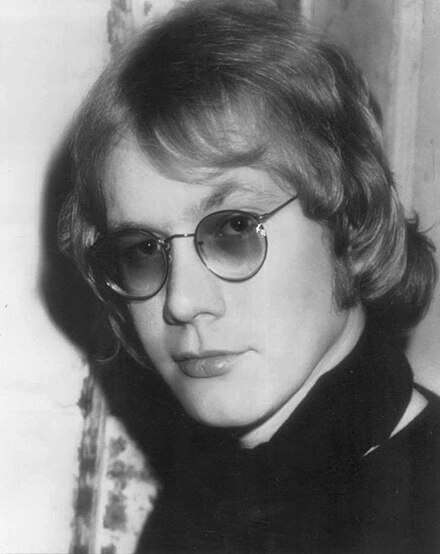




_-_The_Calling_of_Saints_Peter_and_Andrew_-_RCIN_402824_-_Hampton_Court_Palace.jpg)


.jpg)


.jpg)


.jpg)


_-_Gr%C3%A3o_Vasco_(Museu_Nacional_Gr%C3%A3o_Vasco).png)